


Certified Paralegal Training Online Course
Overview The UK legal services sector contributed more than £37 billion to the economy in 2023, showing its scale and …
 249 Students


CPD Accredited
All of our courses meet recognised CPD Quality Standards, supporting high-quality learning and ongoing professional development.
QLS Endorsed
The Quality Licence Scheme (QLS) is a recognised accreditation framework that endorses high-quality, non-regulated training courses across a wide range of industries.
Association of Healthcare Trainers
The Association of Healthcare Trainers (AoHT) supports excellence in healthcare education by helping training providers deliver up-to-date, industry-focused learning and maintain strong professional standards..
UKRLP Registered
UKRLP registration demonstrates commitment to recognised training and education standards, helping organisations build trust, improve credibility, and showcase their presence within the UK learning and skills sector.
Course Curriculum
| Certified Paralegal Training Online Course - Updated Version | |||
| Understanding the Concept of Paralegal | 00:25:00 | ||
| Key Legal Terminology | 00:16:00 | ||
| Effective Communication Skills for Paralegals | 00:39:00 | ||
| The Legal Workplace & Professionals | 00:46:00 | ||
| Law & Legal Systems | 00:34:00 | ||
| Contract & Business Law | 00:54:00 | ||
| Property Law | 00:20:00 | ||
| Wills, Probate, Estate Law | 00:15:00 | ||
| Criminal Law | 00:24:00 | ||
| Common Paralegal Legal Matters | 00:35:00 | ||
| Human Rights | 00:12:00 | ||
| Conflict and Conflict Resolution | 00:18:00 | ||
| Professional Conduct and Ethics of Paralegals | 00:25:00 | ||
| Mandatory Knowledge Fields and Survival Tips for Paralegals | 00:12:00 | ||
| Mock Exam | |||
| Mock Exam – Certified Paralegal Training Online Course | 00:20:00 | ||
| Final Exam | |||
| Final Exam – Certified Paralegal Training Online Course | 00:20:00 | ||
| Order your Certificate | |||
| Order your Certificate | 00:00:00 | ||
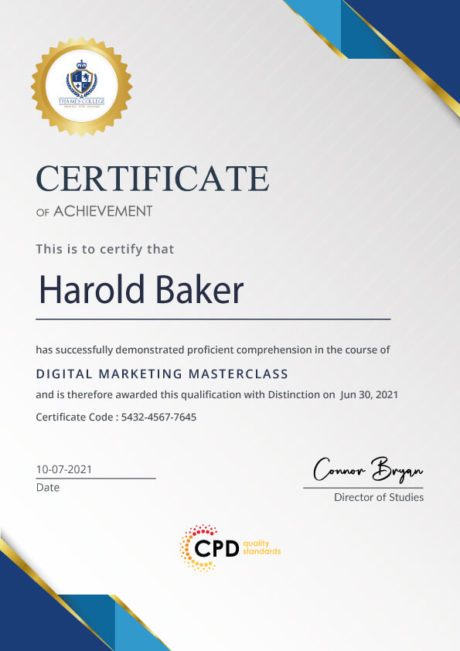
The Certified Paralegal Training Online Course is a CPD-accredited programme introducing paralegal responsibilities, legal terminology, workplace communication and major areas of UK law. Learners receive online materials, assessments and twelve months of access for flexible, self-directed professional development from home.
Yes. The training begins with essential paralegal concepts before introducing legal terminology, professional communication, workplace duties and different areas of law. It suits beginners, career changers, administrators and legal support workers seeking flexible online study without stated previous experience requirements.
Learners study paralegal responsibilities, legal terminology, communication, UK legal systems, contracts, business, property, wills, probate, criminal law and human rights. Further topics include common legal matters, conflict resolution, professional ethics and practical knowledge for working in legal support environments confidently.
No universal qualification is required for every UK paralegal position because employer expectations differ. However, relevant legal education, practical experience, communication skills and administrative ability can strengthen applications. Regulated activities or progression routes may require approved training and professional assessment.
The training may support applications for Paralegal, Legal Assistant, Legal Secretary, Legal Clerk, Legal Administrator or Legal Receptionist roles. Employment is not guaranteed, and organisations may request qualifications, office experience, typing skills, case-management knowledge or role-specific legal training from candidates.
Exclusive Deal! 95% Off, Today Only!
Offer Ends Soon
 Take All courses for £49

 Access
 Level
Level
 Number of Units
 Duration
 Course Type
- £24.99
- 1 year
- Level 4
- Number of Units15
- Number of Quizzes2
- 6 hours, 55 minutes Gift this course
 14-Day Money-Back Guarantee
Exclusive Deal! 95% Off, Today Only!
Discounted Total:- 50% discount for orders of 10+ courses
- 60% discount for orders of 50+ courses
- 70% discount for orders of 100+ courses