


An Introduction to Number Theory
Overview Students often struggle with understanding patterns in numbers, especially when topics like primes, modular arithmetic, and cryptography appear complex …
4.7
4.7 Rating ( 2 Reviews )  21 Students
Bestseller
Great Service
Highly Rated
Trending

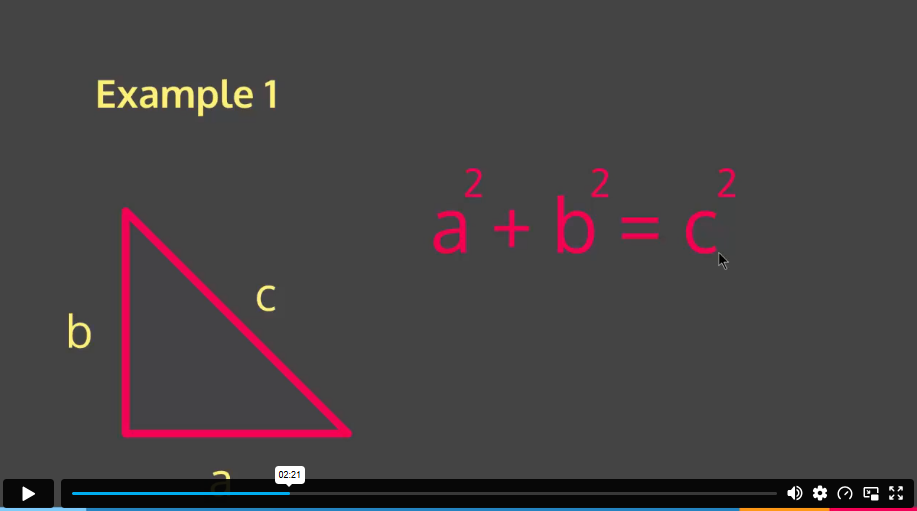
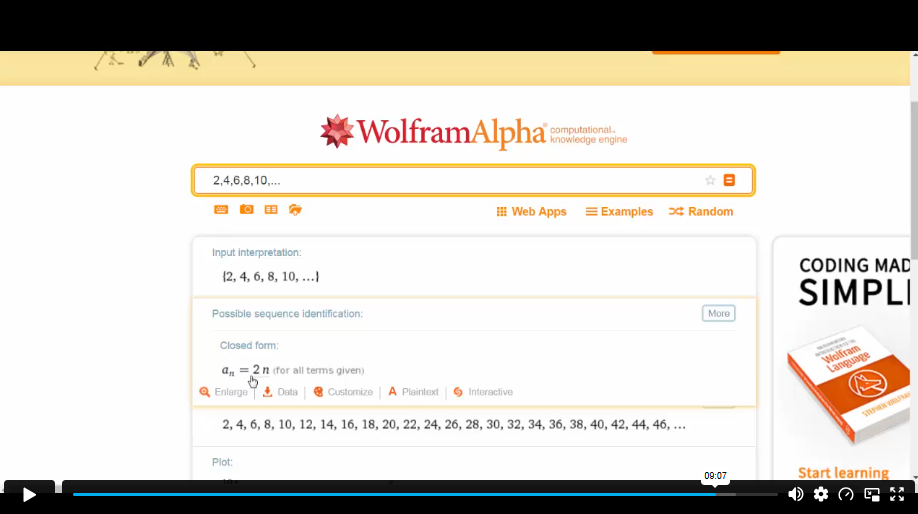
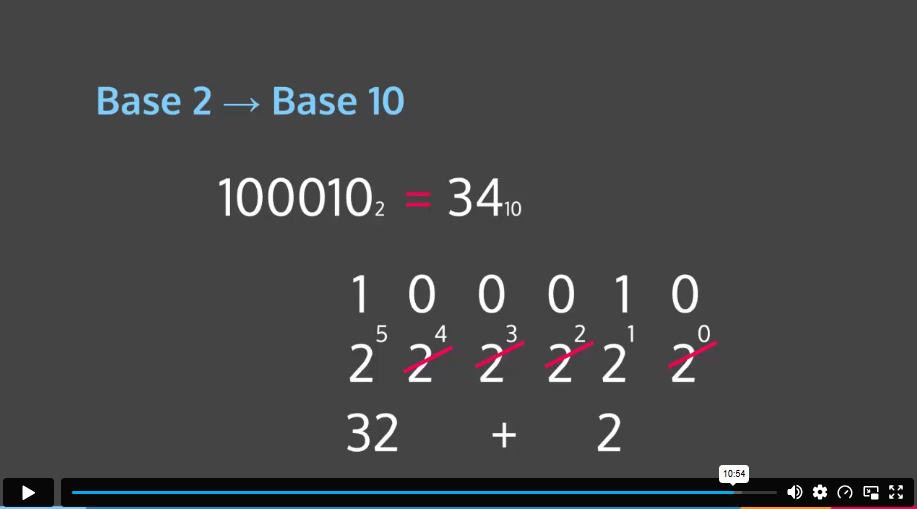

Course Curriculum
| Introduction | |||
| What is Number Theory | 00:08:00 | ||
| Basics of Number Theory | |||
| Number Theory | 00:07:00 | ||
| Number Sets | 00:09:00 | ||
| Number Patterns | 00:10:00 | ||
| Even & Odd Numbers | 00:11:00 | ||
| Number Properties | 00:10:00 | ||
| Proofs | 00:11:00 | ||
| Number Bases | |||
| Number Bases | 00:12:00 | ||
| Binary Base | 00:12:00 | ||
| Binary Arithmetics | 00:15:00 | ||
| Hexadecimal Base | 00:13:00 | ||
| Hexadecimal Arithmetics | 00:14:00 | ||
| Factorials | |||
| Factorial | 00:05:00 | ||
| Double Factorial | 00:09:00 | ||
| Super Factorial | 00:03:00 | ||
| Exponential Factorial | 00:03:00 | ||
| Factorion | 00:05:00 | ||
| Stirling’s Formula | 00:03:00 | ||
| Number of Digits | 00:03:00 | ||
| Divisibility | |||
| Divisibility | 00:07:00 | ||
| Divisibility Rules | 00:04:00 | ||
| Euclidean Division Theorem | 00:08:00 | ||
| GCD & LCM | 00:11:00 | ||
| Bézout’s Identity | 00:08:00 | ||
| Perfect Numbers | 00:04:00 | ||
| Practical Numbers | 00:05:00 | ||
| Amicable Numbers | 00:04:00 | ||
| Fibonacci Sequence | 00:09:00 | ||
| Tribonacci Sequence | 00:05:00 | ||
| Golden Ratio | 00:11:00 | ||
| Primes | |||
| Prime Numbers | 00:09:00 | ||
| Fundamental Theorem of Arithmetics (FTA) | 00:10:00 | ||
| Almost Primes | 00:07:00 | ||
| Prime Powers | 00:02:00 | ||
| Factorial Prime | 00:03:00 | ||
| Euclid’s Theorems | 00:09:00 | ||
| The Prime Number Theorem | 00:04:00 | ||
| Unsolved Problems | 00:06:00 | ||
| Number Empire | 00:07:00 | ||
| Modular Arithmetic | |||
| Modular Arithmetics | 00:09:00 | ||
| Congruence | 00:13:00 | ||
| Congruence Class | 00:12:00 | ||
| Residue Systems | 00:04:00 | ||
| Quadratic Residues | 00:04:00 | ||
| Modular Operations | 00:06:00 | ||
| Inverses | 00:07:00 | ||
| Modular Exponentiation | 00:10:00 | ||
| Wilson’s Theorem | 00:05:00 | ||
| Chinese Remainder Theorem | 00:09:00 | ||
| Fermat’s Little Theorem | 00:05:00 | ||
| Euler’s Totient Function | 00:07:00 | ||
| Euler-Fermat Theorem | 00:04:00 | ||
| Continued Fractions | |||
| Continued Fractions | 00:08:00 | ||
| Negative Continued Fractions | 00:11:00 | ||
| Finite Continued Fractions | 00:14:00 | ||
| Infinite Continued Fractions | 00:17:00 | ||
| Periodic Continued Fractions | 00:10:00 | ||
| Convergent | 00:12:00 | ||
| Cryptography | |||
| Cryptography | 00:09:00 | ||
| Early Ciphers | 00:11:00 | ||
| Public Key Cryptography | 00:13:00 | ||
| RSA Encryption | 00:11:00 | ||
| Diffie-Hellman Protocol | 00:04:00 | ||
| Resources | |||
| Resource – An Introduction to Number Theory | 00:00:00 | ||
| Assignment | |||
| Assignment – An Introduction to Number Theory | 00:00:00 | ||

Course Reviews
No Reviews found for this course.
1. What is number theory used for? +
It is used in cryptography, coding systems, and mathematical problem-solving.
2. Is this course suitable for beginners? +
Yes, it starts from basic concepts and builds gradually.
3. Do I need advanced maths knowledge? +
No, basic school-level mathematics is enough.
4. How does number theory help in careers? +
It supports fields like cybersecurity, programming, and data analysis.
5. What topics are included in this course? +
It covers primes, modular arithmetic, divisibility, and cryptography.
£24.99
Exclusive Deal! 92% Off, Today Only!
Offer Ends Soon
 Take All courses for £49

This course includes:
 Access
 Level
 Number of Units
 Duration
 Course Type
- £24.99
- 1 year
- Intermediate
- Number of Units65
- Number of Quizzes0
- 8 hours, 31 minutes Gift this course
 14-Day Money-Back Guarantee
£24.99
/Unit Price
Exclusive Deal! 95% Off, Today Only!
Discounted Total:£120.00
Quantity:
Buying more than one of the same courses?
- 50% discount for orders of 10+ courses
- 60% discount for orders of 50+ courses
- 70% discount for orders of 100+ courses
Looking for a more personalised package?
Contact Us Now