trustpilot

Capital Budgeting & Investment Decision Rules

Overview Choosing the wrong investment can tie up capital, weaken cash flow and reduce long-term returns. Capital Budgeting & Investment …

4.7 4.7 Rating ( 13 Reviews )
239 Students
Bestseller
Great Service
Highly Rated
i Last Updated: 4th September 2026
◎ English
Flexible Schedule
thumbnail

Unlock 3,000+ Courses & Unlimited Free Digital Certificates for £99 Only! Grab Now

Overview

Choosing the wrong investment can tie up capital, weaken cash flow and reduce long-term returns. Capital Budgeting & Investment Decision Rules shows learners how organisations evaluate projects before committing funds. The course covers time value of money, compounding, discounting, present values, net present value, payback periods, internal rate of return and modified rate of return.

Designed for finance learners, managers, entrepreneurs and aspiring analysts, this online capital budgeting course builds stronger project appraisal and financial decision-making knowledge. It may support further study and experience for UK careers including investment analyst, management accountant, finance officer and business analyst. Complete 16 focused units, study flexibly for one year and receive CPD certification after successful completion. 

Enrol with Thames College today and start assessing investment opportunities with greater confidence.

Key Benefits Included

► Accredited by CPD
► Instant Access
► 24/7 Learning Assistance
► Self-paced learning and laptop, tablet, smartphone-friendly
► Fully online, interactive course with audio voiceover
► Developed by qualified professionals in the field

Sneak Peek

Learning Outcomes

Develop clear knowledge of capital budgeting methods, investment appraisal tools and decision rules used to compare projects and allocate business funds.

► Explain the time value of money in investment decision-making.
► Calculate compounding, discounting and present values for project appraisal.
► Apply NPV decision rules when comparing proposed business investments.
► Assess payback periods and recognise their major calculation limitations.
► Compare IRR, MRR and NPV results across investment projects.
► Evaluate projects with different lives and limited capital budgets.

Who is This Course For?

This accessible online course suits learners who want to make stronger financial decisions, assess investments and support business planning with confidence.

► Finance learners building knowledge of capital investment appraisal methods.
► Business owners comparing growth projects before committing company funds.
► Managers involved in budgeting, planning and resource allocation decisions.
► Accounting learners seeking stronger financial evaluation and calculation skills.
► Aspiring analysts preparing for further finance or business study.
► Entrepreneurs assessing investment choices, project returns and funding constraints.

Certification

CPD Certification

After successfully completing the assessment of this Capital Budgeting & Investment Decision Rules course, you can apply for the CPD accredited certificates.
PDF certificate: £9.99
Hardcopy certificate: £15.99

Accreditation

All of our courses, including this course is fully accredited, providing you with up-to-date skills and knowledge and helping you to become more competent and effective in your chosen field.

CPD Accredited

All of our courses meet recognised CPD Quality Standards, supporting high-quality learning and ongoing professional development.

QLS Endorsed

The Quality Licence Scheme (QLS) is a recognised accreditation framework that endorses high-quality, non-regulated training courses across a wide range of industries.

Association of Healthcare Trainers

The Association of Healthcare Trainers (AoHT) supports excellence in healthcare education by helping training providers deliver up-to-date, industry-focused learning and maintain strong professional standards..

UKRLP Registered

UKRLP registration demonstrates commitment to recognised training and education standards, helping organisations build trust, improve credibility, and showcase their presence within the UK learning and skills sector.

Career Opportunities

This capital budgeting course may complement further qualifications and experience for finance, accounting, investment and business analysis careers across organisations throughout the United Kingdom’s public and private sectors.

► Investment Analyst — Average UK Salary: £28,000–£75,000
► Management Accountant — Average UK Salary: £30,000–£60,000
► Finance Officer — Average UK Salary: £26,000–£38,000
► Business Analyst — Average UK Salary: £23,000–£55,000
► Business Adviser — Average UK Salary: £27,000–£65,000
► Auditor — Average UK Salary: £28,000–£70,000

Course Curriculum

The course covers a wide range of essential topics, including:

► Preview
► Basics of Time Value of Money
► Concepts of Compounding, Discounting, Present Values

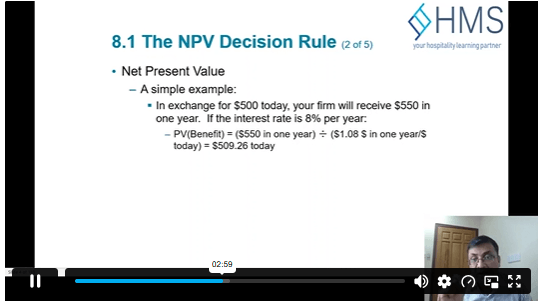
► NPV Method Meaning and Decision Rules
► Use of NPV with an Example and Practical Life Limitation of NPV Method
► NPV Profile of the Project to Understand Sensitivity

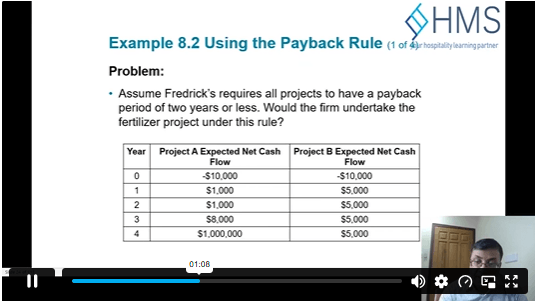
► Payback Period Meaning and Calculations
► Drawback of Payback Period Method

► IRR, Meaning and Method of Calculation with Limitation
► Example of Demonstrate NPV and IRR Calculation and Inconsistent Result
► Case of Multiple IRR and MRR as an Attempt to Fix the Problem

► How to Choose between Mutually Exclusive Project
► Choosing Project with Different Life
► Choosing Project in Budget Constraints

► Final Summary

Excellent

4.7 Average - 13 Reviews

★ Reviews
Callum Hughes
The lessons made NPV, IRR and payback period calculations much easier to follow. The examples were clear, and I now feel more confident comparing investment projects.
Imogen Clarke
I enjoyed the structured approach to capital budgeting. The sections on project sensitivity and budget constraints were especially helpful for improving my financial decision-making knowledge.

Course Curriculum

Section 01: Introduction
Preview 00:01:00
Basics of Time Value of Money 00:10:00
Concepts of Compounding, Discounting, Present Values 00:09:00
Section 02: NPV Method
NPV Method Meaning and Decision Rules 00:07:00
Use of NPV with an Example and Practical Life Limitation of NPV Method 00:06:00
NPV Profile of the Project to Understand Sensitivity 00:04:00
Section 03: Payback Period Method
Payback Period Meaning and Calculations 00:02:00
Drawback of Payback Period Method 00:03:00
Section 04: Internal Rate of Return (IRR)
IRR, Meaning and Method of Calculation with Limitation 00:07:00
Example of Demonstrate NPV and IRR Calculation and Inconsistent Result 00:04:00
Case of Multiple IRR and MRR as an Attempt to Fix the Problem 00:08:00
Section 05: Evaluating Projects in Different Lives
How to Choose between Mutually Exclusive Project 00:11:00
Choosing Project with Different Life 00:06:00
Choosing Project in Budget Constraints 00:05:00
Section 06: Conclusion
Final Summary 00:04:00
Assignment
Assignment -Capital Budgeting & Investment Decision Rules 00:00:00

Certificate of Achievement

Upon completion, you will receive a CPD-accredited certificate recognised globally. Choose from:

Pdf Certificate & Transcript  £7.99
Hardcopy Certificate & Transcript  £17.99

This certification validates your knowledge and skills, boosting your employability in healthcare.

1. What is capital budgeting and why is it important? +

Capital budgeting is the process businesses use to assess major long-term investments before committing funds. It helps decision-makers compare expected costs, cash flows, returns and risks, making it easier to select projects that may support financial goals and business growth.

2. What topics does the capital budgeting course cover? +

This online course covers time value of money, compounding, discounting, present values, NPV, payback periods, IRR and MRR. Learners also examine project sensitivity, mutually exclusive choices, unequal project lives, limited budgets and common weaknesses of investment appraisal methods widely used.

3. Is this capital budgeting course suitable for beginners? +

The course is set at intermediate level but has no entry requirements. Basic numeracy and an interest in finance will help. Learners aged over sixteen can access the lessons using a suitable computer, tablet or smartphone with reliable internet access.

4. What is the difference between NPV and IRR? +

NPV estimates how much value a project may add after future cash flows are discounted. IRR identifies the discount rate at which NPV becomes zero. Both methods support investment comparison, although they can produce different rankings in certain business situations.

5. What is the payback period in capital budgeting? +

The payback period estimates how long an investment takes to recover its initial cost through expected cash inflows. It is simple to use, but it may ignore some cash flows after recovery and the time value of money in calculations.

top