
trustpilot

CBT for Children and Adults with Role Playing

Overview One in five children and young people aged 8–25 in England had a probable mental disorder in 2023, according …

4.8 4.8 Rating ( 13 Reviews )
240 Students
Bestseller
Great Service
Highly Rated
i Last Updated: 16th September 2026
◎ English
Flexible Schedule
thumbnail

Unlock 3,000+ Courses & Unlimited Free Digital Certificates for £99 Only! Grab Now

Overview

One in five children and young people aged 8–25 in England had a probable mental disorder in 2023, according to NHS England. Yet thoughts, emotions and behaviours often appear differently across age groups, making sensitive communication essential. CBT for Children and Adults with Role Playing turns key cognitive behavioural therapy concepts into clear, relatable learning through simulated therapist-client conversations.

Explore automatic thoughts, cognitive restructuring, behavioural activation, exposure, relaxation, treatment planning and age-appropriate CBT approaches. Designed for support workers, teachers, carers, counselling learners and wellbeing staff, the course builds awareness and communication knowledge for support settings.

Completion may support UK career pathways such as Family Support Worker, Youth Worker, Pastoral Care Worker or Counsellor, although further recognised training may be required. Enrol with Thames College today.

Key Benefits Included

► Accredited by CPD
► Instant Access
► 24/7 Learning Assistance
► Self-paced learning and laptop, tablet, smartphone-friendly
► Fully online, interactive course with audio voiceover
► Developed by qualified professionals in the field

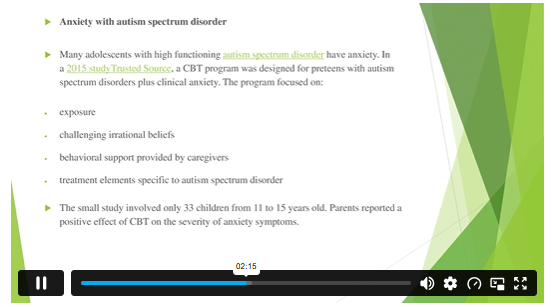
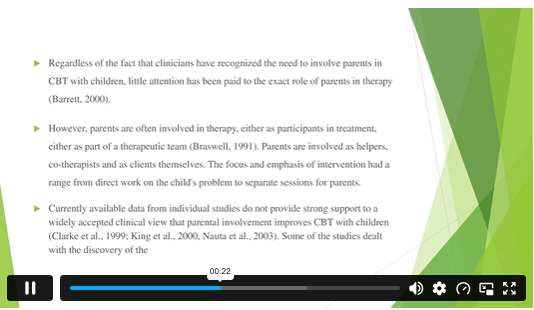
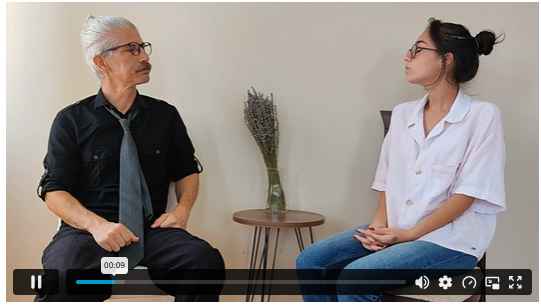
Sneak Peek

Learning Outcomes

This course develops knowledge of CBT concepts, child-focused approaches, role-playing methods, treatment planning and communication techniques for supportive care and education settings.

By the end of this course, learners will be able to:

► Explain core CBT concepts and their common uses across different age groups.
► Recognise automatic thoughts, cognitive distortions, and restructuring methods.
► Describe behavioural activation, exposure, relaxation, and relapse prevention approaches.
► Compare child-focused and adult CBT approaches effectively.
► Use role-playing to practise reflection and communication techniques.
► Outline case conceptualisation, treatment planning, and CBT session structures.

Who is This Course For?

This online CBT course welcomes learners interested in behaviour, communication and mental health support across child, adult, education and care settings.

► Support workers strengthening CBT communication and behaviour awareness.
► Counselling learners exploring CBT concepts through role-playing activities.
► Teachers supporting children with emotional and behavioural difficulties.
► Parents learning child-focused CBT and supportive communication methods.
► Wellbeing staff learning cognitive restructuring and behavioural activation concepts.
► Career changers exploring counselling, psychology, and mental health careers.

Certification

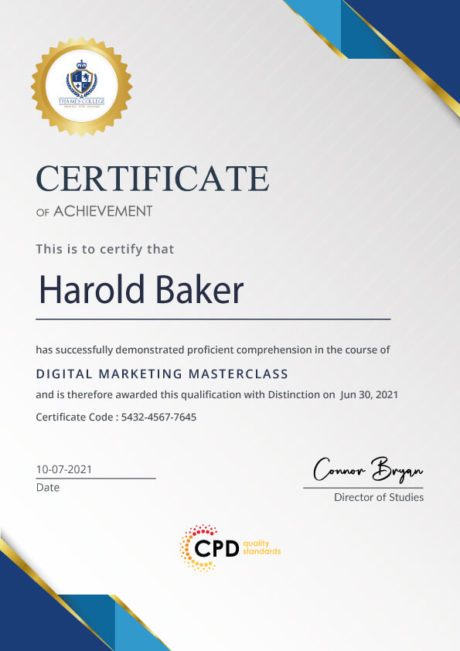
CPD Certification

After successfully completing the assessment of this CBT for Children and Adults with Role Playing course, you can apply for the CPD accredited certificates.
PDF certificate: £9.99
Hardcopy certificate: £15.99

Accreditation

All of our courses, including this course is fully accredited, providing you with up-to-date skills and knowledge and helping you to become more competent and effective in your chosen field.

CPD Accredited

All of our courses meet recognised CPD Quality Standards, supporting high-quality learning and ongoing professional development.
QLS Endorsed

The Quality Licence Scheme (QLS) is a recognised accreditation framework that endorses high-quality, non-regulated training courses across a wide range of industries.

Association of Healthcare Trainers

The Association of Healthcare Trainers (AoHT) supports excellence in healthcare education by helping training providers deliver up-to-date, industry-focused learning and maintain strong professional standards..

UKRLP Registered

UKRLP registration demonstrates commitment to recognised training and education standards, helping organisations build trust, improve credibility, and showcase their presence within the UK learning and skills sector.

Career Opportunities

This course can support progression towards counselling, education, care and wellbeing careers, although regulated clinical roles require further qualifications, supervised experience and relevant professional registration.

► Cognitive Behavioural Therapist — Average UK Salary: £40,000–£57,000 per year
► Counsellor — Average UK Salary: £25,000–£48,000 per year
► Family Support Worker — Average UK Salary: £24,000–£36,000 per year
► Youth Worker — Average UK Salary: £24,000–£37,000 per year
► Pastoral Care Worker — Average UK Salary: £24,000–£31,000 per year
► Residential Support Worker — Average UK Salary: £22,000–£30,000 per year

Course Curriculum

The course covers a wide range of essential topics, including:

► What Is Cognitive Behavioural Therapy and How Does It Work for Children?
► CBT for ADHD, Anxiety, Mood Disorders, Autism, Trauma and PTSD
► Using CBT for Eating Disorders and Defiant Behaviour
► CBT Approaches for Substance Misuse
► Research Supporting the Use of CBT
► Benefits of Cognitive and Emotional Therapy
► Effectiveness of CBT for Anxious Children Aged Three to Seven

► Introduction to Cognitive Behavioural Therapy
► Epictetus and the Core Principles of CBT
► Key Areas Where CBT Can Be Applied
► CBT Interventions and Cognitive Restructuring
► Exposure Therapy and Relapse Prevention
► Factors Affecting CBT Treatment
► Case Conceptualisation and Treatment Planning
► Introducing Patients to Brief CBT
► Managing Initial Sessions and Patient Expectations
► Problem-Solving Methods and Therapeutic Strategies
► Progressive Muscle Relaxation Techniques
► Deep-Breathing and Guided Imagery Exercises

► Interview One: Clarification, Paraphrasing and Reflection
► Interview Two: Explaining Automatic Thoughts to a Patient
► Interview Three: Identifying Automatic Thoughts During Sessions
► Interview Four: Monitoring Automatic Thoughts Between Sessions
► Interview Five: Behavioural Activation and Its Importance

Excellent

4.8 Average - 13 Reviews

★ Reviews
Hannah Redmond
The modules explained cognitive restructuring, exposure and communication techniques clearly. It was flexible, engaging and valuable for developing mental health awareness.
Oliver Bennett
The role-play sessions made automatic thoughts and behavioural activation much easier to understand. The course was clear, structured and informative.

Course Curriculum

Section 01: CBT Introduction for Children
What is Cognitive Behavioral Therapy (CBT)? How Does CBT for Children Work? 00:05:00
ADHD, Anxiety, Mood Disorders, Autism Spectrum Disorder, Trauma and PTSD 00:04:00
Is CBT an Effective Form of Therapy for Children? Eating Disorder, Defiant 00:10:00
Substance Misuse, Researching on Using CBT 00:04:00
Benefits of Using Cognitive Emotional Therapy 00:06:00
Effectiveness of CBT in 3-7 years old Anxious Children 00:05:00
Section 02: What is Cognitive Behavioral Therapy (CBT)?
What is Cognitive Behavioral Therapy (CBT)? Epictetus, Areas of CBT App. 2 00:25:00
What is Cognitive Behavioral Therapy (CBT)? Epictetus, Areas of CBT App. 2 00:01:00
Interventions, Cognitive Restructuring, Exposure, Relapse Prevention, Factors! 00:24:00
What are case conceptualization and treatment planning? 00:12:00
Orienting the Patient to Brief CBT, Initial Sessions, Patient Expectations 00:26:00
Problem Solving, Strategies, PMR (Progressive Muscle Relaxation), Deep Breathing, İmagery 00:25:00
Section 03: Role Plays: Psychologist and Client
Interview 1: Clarification (00.00-00.43 Minutes) and Paraphrasing and Reflection 00:02:00
Interview 2: Explaining Automatic Thoughts to Your Patient 00:01:00
Interview 3: Automatic Thoughts in Session 00:01:00
Interview 4: Automatic Thoughts between Sessions 00:01:00
Interview 5: What is behavioral activation, and why is it important? 00:01:00

Certificate of Achievement

Upon completion, you will receive a CPD-accredited certificate recognised globally. Choose from:

Pdf Certificate & Transcript  £7.99
Hardcopy Certificate & Transcript  £17.99

This certification validates your knowledge and skills, boosting your employability in healthcare.

1. What is CBT for Children and Adults with Role Playing? +

This online course introduces cognitive behavioural therapy concepts for children and adults through structured lessons and simulated therapist-client discussions. It covers thought patterns, emotions, behaviour, treatment planning, communication methods and selected CBT techniques used within supportive mental health learning environments.

2. Is the online CBT course suitable for beginners? +

Yes. The content begins with foundational CBT ideas before introducing cognitive restructuring, exposure, behavioural activation, relaxation and case planning. It is suitable for newcomers, support workers, carers, teachers and counselling learners who want accessible introductory knowledge without previous therapy training.

3. What will I learn in this CBT role-playing course? +

Learners examine automatic thoughts, emotional responses, behavioural patterns, cognitive restructuring, exposure, relapse prevention, problem-solving and relaxation methods. The curriculum also introduces case conceptualisation, treatment planning and communication skills demonstrated through psychologist-and-client role-playing scenarios for children and adults responsibly online.

4. Does this course qualify me to become a CBT therapist? +

No. This introductory course does not provide the regulated education, supervised clinical experience or professional accreditation normally required to practise independently as a CBT therapist. Learners seeking clinical work should research recognised training routes, employer requirements and relevant professional standards.

5. Will I receive a certificate after completing the CBT course? +

Learners who meet the course completion and assessment requirements may request a CPD-accredited certificate from Thames College. It can demonstrate continuing learning on a CV or development record, but it is not equivalent to a regulated counselling or psychotherapy qualification.

top