

This module provides protocols for the handling, maintenance, and care of catheters and catheter bags. It includes instructions on proper cleaning, securement, and disposal to prevent infection. Learners will also understand how to monitor catheter function and manage complications that may arise.
Start Your Career as a Nursing & Healthcare Assistant
Gain the foundational skills needed for a rewarding healthcare career. Learn nursing care, patient communication, and clinical skills online with Thames College
- Nursing Assistant Training Course
- Nurse Prescribing Diploma
- Clinical Training for Nurses and Carers – Catheterisation
- Phlebotomy & Blood Collection Procedure

What You’ll Learn
Knowledge of Nursing Practice
Clinical and Patient Care Procedures
Legal, Ethical, and Safety Principles
Medication and Prescription Knowledge
Earn a valuable certificate
Skills for Diverse Patient Needs
Course 1
Nursing Assistant Diploma

Nursing Assistant Diploma Level 7
The Nursing Assistance course offers a complete overview of the foundational concepts in nursing care. This course is ideal for those who want to step into the healthcare field or enhance their existing knowledge to provide quality nursing support.

Content Covered
Introduces the nursing profession, roles, and responsibilities. Covers the history and evolution of nursing. Sets the foundation for professional practice.
Explores various healthcare environments and their functions. Highlights roles of nurses in hospitals, clinics, and community care. Discusses adapting practices to different settings.
Covers legal frameworks governing nursing practice. Introduces ethical principles and standards for safe patient care. Discusses nurses’ accountability and responsibilities.
Focuses on professional conduct and code of ethics. Explains regulatory requirements and documentation standards. Highlights decision-making in complex ethical situations.
Covers communication skills with patients, families, and colleagues. Discusses verbal, non-verbal, and written communication. Emphasises listening and empathy in nursing practice.
Introduces workplace safety practices and regulations. Covers risk assessment, accident prevention, and emergency procedures. Promotes a safe environment for patients and staff.
Covers personal, patient, and environmental hygiene practices. Discusses preventing infections and maintaining cleanliness. Emphasises the role of hygiene in patient well-being.
Focuses on methods to prevent and control infections. Explains standard precautions, isolation protocols, and PPE use. Highlights nurses’ role in infection prevention.
Covers aseptic techniques and sterile procedures. Explains how to maintain a contamination-free environment. Ensures patient safety during clinical procedures.
Introduces safe medication practices and dosage calculations. Discusses routes of administration and documentation. Emphasises patient safety and monitoring effects.
Explains the structure and function of the immune system. Discusses common disorders and immune responses. Highlights the role of nurses in supporting immunity.
Covers the importance of sleep for patient recovery. Discusses sleep disorders and nursing interventions. Promotes techniques to improve rest in healthcare settings.
Explains factors affecting patient mobility. Covers safe transfer techniques and prevention of complications. Highlights rehabilitation and mobility support strategies.
Introduces types and assessment of pain. Discusses pharmacological and non-pharmacological interventions. Emphasises personalised approaches for effective relief.
Covers dietary needs and nutritional assessment. Discusses planning and monitoring patient diets. Highlights the role of nutrition in recovery and health maintenance.
Explains body fluid compartments and electrolyte functions. Covers assessment, imbalance identification, and corrective measures. Emphasises safe nursing interventions.
Covers urinary and bowel elimination processes. Discusses monitoring, assistance, and hygiene practices. Highlights recognising and responding to complications.
Explains respiratory physiology and oxygen delivery methods. Covers monitoring oxygen levels and supporting respiratory function. Emphasises interventions for optimal patient oxygenation.
Course 2
Nurse Prescribing Diploma

Nurse Prescribing Diploma
The Nurse Prescribing Diploma is a comprehensive course designed for individuals aiming to enhance their clinical knowledge and advance in healthcare roles. With 15 in-depth units, this online diploma provides essential skills and updates on nurse prescribing practices. Learners enjoy a full year of access, flexible scheduling, expert support, and no formal entry requirements.

Content Covered
This module introduces nurse prescribing, exploring its role in healthcare and the importance of understanding prescribing practices. It provides an overview of the principles and responsibilities that come with the role. The module also covers key concepts like the scope of practice and professional boundaries.
In this module, learners will explore the legal and ethical responsibilities involved in nurse prescribing. It covers the legislative framework, including the Nurse Prescribers’ Formulary, and examines ethical considerations in prescribing decisions. The module also addresses how nurses can maintain professional accountability in practice.
This module focuses on the management of medicines within a clinical setting, highlighting the importance of safety and compliance. It covers the processes for ordering, storing, administering, and reviewing medications. Learners will also gain insight into the role of nurses in preventing medication errors.
Learners will explore the management of anxiety disorders in adults, with a focus on pharmacological treatment options. The module covers common medications used to treat anxiety and discusses the nurse’s role in monitoring and evaluating patient responses. It also includes practical advice on managing treatment plans.
This module provides an overview of common liver diseases and how they affect prescribing practices. Learners will gain knowledge on the diagnosis, treatment options, and challenges faced when prescribing for patients with liver conditions. Special emphasis is placed on safe prescribing strategies.
This module examines common health issues and their pharmacological management. Topics include pain management, infections, and chronic conditions. Learners will gain practical skills in selecting appropriate medications and adjusting prescriptions based on individual patient needs.
Focusing on the prescribing of antibiotics and other antimicrobial agents, this module covers the principles of effective antimicrobial therapy. It addresses concerns such as resistance, appropriate prescribing guidelines, and the nurse’s role in managing infections with antimicrobials.
In this module, learners will explore the treatment of common cardiac problems through pharmacological interventions. It covers medications used to manage conditions like hypertension, heart failure, and arrhythmias. The module provides guidance on safe prescribing and monitoring of these treatments.
This module delves into neurological disorders and the medications prescribed to manage these conditions. Topics include epilepsy, Parkinson’s disease, and stroke management. Learners will also learn about the potential side effects and drug interactions specific to neurological medications.
The focus of this module is on the pharmacological management of palliative care patients. It covers the treatment of symptoms like pain, nausea, and breathlessness, as well as the role of nurses in prescribing for comfort care. Ethical considerations in end-of-life care are also discussed.
This module addresses the complexities of prescribing medications during pregnancy and breastfeeding. Learners will gain an understanding of the risks and benefits of different drug therapies in these sensitive periods. Special attention is given to maternal and fetal safety when considering treatment options.
This module covers the challenges and considerations involved in prescribing for older adults. It examines the physiological changes in aging and how they affect drug metabolism. Learners will explore safe prescribing practices and strategies for managing polypharmacy in elderly patients.
This module explores the unique considerations involved in prescribing for pediatric patients. It covers pediatric dosing guidelines, medication safety, and age-specific considerations. Learners will also learn about the importance of engaging families in the prescribing process for children.
In this module, learners will become familiar with the most commonly prescribed medicines. It includes information on classes of drugs, indications, dosages, and potential side effects. The module will also cover the importance of staying updated on emerging medications in clinical practice.
This final module looks at the future of nurse prescribing, examining emerging challenges and opportunities. It explores the evolving scope of nurse prescribers’ roles and the impact of technological advances and policy changes. Learners will also consider the potential for expanded prescribing authority and its implications.
Course 3
Clinical Training for Nurses and Carers – Catheterisation

Clinical Training for Nurses and Carers – Catheterisation
The Clinical Training for Nurses and Carers – Catheterisation course is designed to strengthen essential clinical skills for professionals working in healthcare. Covering 7 key units, this CPD-accredited training offers comprehensive insights into safe and effective catheterisation practices. With one-year access to all learning materials, learners can study at their own pace with expert support.
Content Covered
This module provides an overview of urinary catheterisation, introducing its purpose and key principles. It discusses when catheterisation is appropriate and the role of healthcare professionals in performing the procedure. Learners will also gain insights into the different types of catheters used in clinical practice.
In this module, learners will explore the structure and function of the urinary system. It covers the kidneys, bladder, urethra, and their role in the body’s waste elimination process. Understanding the anatomy and physiology of the urinary system is essential for effective catheterisation and patient care.
This module provides essential information for patients who require catheterisation. It includes step-by-step guidance on the procedure, potential risks, and how to manage catheters effectively at home. It also focuses on the importance of patient education in ensuring comfort and safety during catheter use.
This module offers detailed guidance for nursing and care staff on the proper techniques for catheterisation. It covers infection prevention, maintaining catheter hygiene, and recognising signs of complications. Nurses and care staff will learn how to provide patient-centred care while minimising risks.
In this module, learners will explore the specific protocols for performing catheterisation in females. It covers the anatomy of the female urinary system and the correct techniques for insertion, ensuring comfort and minimising the risk of infection. Emphasis is placed on patient dignity and safety.
This module focuses on the protocols for male catheterisation, addressing the unique anatomical differences and challenges. Learners will be guided on the appropriate insertion techniques, patient positioning, and care considerations for male patients to ensure effective and safe catheter use.
Course 4
Phlebotomy & Blood Collection Procedure
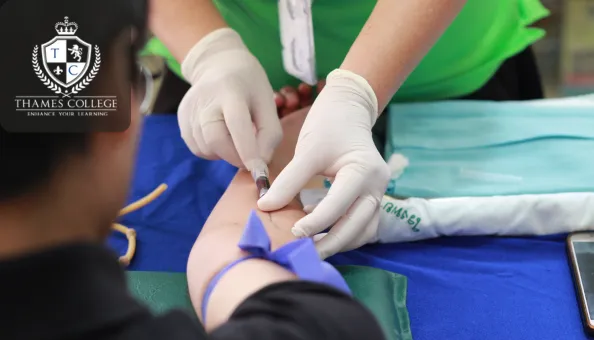
Phlebotomy & Blood Collection Procedure
This Phlebotomy & Blood Collection Procedure course is designed for learners aiming to enhance their clinical skills in a healthcare setting. Covering 9 essential units, this intermediate-level training offers a clear guide to safe and effective blood collection techniques. With one-year access to all materials, learners can study at their own pace and receive expert support throughout.
Content Covered
This module introduces phlebotomy, the practice of drawing blood for medical tests and procedures. It covers the role of phlebotomists in healthcare and the importance of accurate blood collection. Learners will also understand the essential skills required for safe and effective blood sampling.
In this module, learners will explore the anatomy and physiology of blood circulation, its components, and functions. It covers how blood circulates through the body, the role of red and white blood cells, and the importance of plasma and platelets in maintaining health. This knowledge is essential for understanding the significance of blood collection.
This module focuses on the various equipment used in phlebotomy, including needles, syringes, and vacutainers. It covers the proper handling and selection of equipment based on the type of blood collection required. Learners will gain practical insights into maintaining equipment safety and hygiene.
In this module, learners will gain detailed knowledge on performing routine venipuncture, the most common method of blood collection. It includes step-by-step guidance on selecting the correct vein, preparing the site, and safely drawing blood. Emphasis is placed on patient comfort and minimising complications during the procedure.
This module examines potential complications associated with venipuncture, such as hematoma, syncope, and infection. It also covers pre-examination variables that can affect test results, including fasting requirements, medications, and patient factors. Learners will understand how to manage and mitigate these risks during blood collection.
In this module, learners will explore dermal puncture, an alternative blood collection method used for patients with difficult veins or for small blood samples. It covers the techniques, equipment, and safety protocols involved in performing dermal puncture. Learners will also learn how to handle and store dermal blood samples.
This module focuses on the principles of quality assurance and management in phlebotomy. It covers best practices for maintaining high standards in blood collection, including ensuring proper labelling, accurate identification, and appropriate sample handling. Learners will also explore methods for auditing and improving phlebotomy processes.
In this module, learners will study special blood collection procedures, such as arterial blood gas sampling and blood cultures. It includes specific protocols for these procedures and when they are necessary. Learners will gain an understanding of the unique handling and processing requirements for these specialised tests.
This module covers the principles of infection control and risk management in phlebotomy. It includes guidelines on personal protective equipment (PPE), hand hygiene, and sterilisation techniques to prevent the transmission of infections. Learners will also learn how to assess and manage risks to both patients and healthcare workers during blood collection.
Become Our Prime Member
Unlock a world of knowledge with 3000+ courses, unlimited PDF certificates, transcripts, a free student
ID, and more.

- Instant, Unlimited & Lifetime Access to 3000+ Courses
- Unlimited PDF Certificates
- Unlimited PDF Transcripts
- Free Student ID Card & Many More

- Instant, Unlimited & Lifetime Access to 3000+ Courses
- Unlimited PDF Certificates
- Unlimited PDF Transcripts
- Free Student ID Card & Many More
FAQ
A Nursing & Healthcare Assistant supports nurses and doctors by helping patients with day-to-day care, including hygiene, mobility, meals, and emotional support.
Formal qualifications are not always required, but employers typically look for candidates with relevant training or a care-based qualification such as a CPD or Level 2/3 diploma.
Daily duties can include monitoring patient conditions, helping with washing and dressing, assisting with feeding, recording vital signs, and supporting emotional wellbeing.
HCAs can work in NHS hospitals, private clinics, care homes, community health centres, GP surgeries, and home care services.
Yes, there is strong demand due to staff shortages in both public and private sectors. The NHS regularly recruits HCAs for hospitals and outpatient care.
Entry-level roles typically start at £20,000 per year, with experienced HCAs earning up to £28,000–£30,000 depending on location and specialism.
Many HCAs progress to become Senior Healthcare Assistants, Nursing Associates, or pursue further study to qualify as Registered Nurses or Practice Nurses.