
trustpilot

Adverse Childhood Experiences (ACEs)

Online phlebotomy technician training covering blood collection, lab safety and clinical skills with CPD certification.

4.8 4.8 Rating ( 4 Reviews )
7234 Students
Bestseller
Great Service
Highly Rated
i Last Updated: 3rd November 2026
◎ English
Flexible Schedule
thumbnail

Unlock 3,000+ Courses & Unlimited Free Digital Certificates for £99 Only! Grab Now

Overview

The Adverse Childhood Experiences Course explores how difficult or traumatic experiences during childhood can affect a person’s development, emotional wellbeing, behaviour and relationships. Learners will discover the different forms of childhood adversity and understand how these experiences may influence people throughout their lives.

Additionally, this course examines the relationship between childhood trauma, resilience and recovery. It highlights the importance of supportive environments and appropriate professional guidance in helping children overcome challenging experiences.

Throughout the training, learners will explore childhood development, trauma-informed practice and UK safeguarding responsibilities. They will also gain an understanding of how professionals can recognise potential concerns and respond appropriately.

Whether you work in childcare, education, health or social care, the Adverse Childhood Experiences Course provides valuable knowledge to support your understanding of childhood adversity and its wider impact.

Key Benefits Included

► Accredited by CPD
► Instant Access
► 24/7 Learning Assistance
► Self-paced learning and laptop, tablet, smartphone-friendly
► Fully online, interactive course with audio voiceover
► Developed by qualified professionals in the field

Sneak Peek

Learning Outcomes

After completing the Adverse Childhood Experiences (ACEs) Course, learners should be able to:

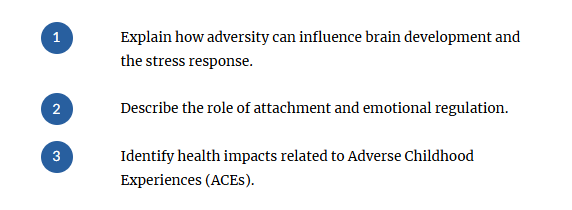
► Explain the concept of adverse childhood experiences and identify common examples.
► Describe how ACEs may affect child development and well-being.
► Explain the relationship between childhood adversity, trauma and resilience.
► Recognise the role of recovery and supportive relationships.
► Understand trauma-informed approaches and the importance of appropriate professional support.
► Identify key UK safeguarding responsibilities and professional considerations.

Who is This Course For?

The Adverse Childhood Experiences (ACEs) Course may be useful for:

► Health and social care professionals.
► Teachers and education support staff.
► Social workers and family support practitioners.
► Care workers and social care support staff.
►Childcare and residential care staff.
► Youth workers and community support professionals.
► Counsellors and mental health support workers.
► Safeguarding and welfare practitioners.

Certification

CPD Certification

After successfully completing the assessment of this Adverse Childhood Experiences (ACEs) Course ,You can apply for the CPD-accredited certificates.
PDF certificate: £9.99
Hardcopy certificate: £15.99

Accreditation

All of our courses, including this course is fully accredited, providing you with up-to-date skills and knowledge and helping you to become more competent and effective in your chosen field.

CPD Accredited

All of our courses meet recognised CPD Quality Standards, supporting high-quality learning and ongoing professional development.

QLS Endorsed

The Quality Licence Scheme (QLS) is a recognised accreditation framework that endorses high-quality, non-regulated training courses across a wide range of industries.
Association of Healthcare Trainers

The Association of Healthcare Trainers (AoHT) supports excellence in healthcare education by helping training providers deliver up-to-date, industry-focused learning and maintain strong professional standards..

UKRLP Registered

UKRLP registration demonstrates commitment to recognised training and education standards, helping organisations build trust, improve credibility, and showcase their presence within the UK learning and skills sector.

Career Opportunities

► Family Support Worker: £24,000 – £36,000 per year
► Youth Worker: £24,000 – £37,000 per year
► Children’s Residential Support Worker: £22,000 – £30,000 per year
► Social Worker: £32,000 – £48,000 per year
► Mental Health Support Worker: £24,000 – £36,000 per year.
► Safeguarding Officer: £27,000 – £50,000 per year.

Salary ranges are indicative UK figures and may vary by location, employer, qualifications and experience. Some roles require specific qualifications, professional registration or additional training. Completing this course alone does not qualify learners for these positions or guarantee employment.

Excellent

4.8 Average - 4 Reviews

★ Reviews
Adam Wilson
This course explained an important subject in a clear and structured way. I particularly appreciated the sections on trauma-informed support, safeguarding responsibilities and the ethical considerations around ACE awareness.
Chloe Williams
I found the Adverse Childhood Experiences (ACEs) Course informative and thought-provoking. It helped me understand how early experiences can influence development and wellbeing, and why supportive relationships and resilience are important.

Course Curriculum

Adverse Childhood Experiences (ACEs)
Module 1: Foundations of Adverse Childhood Experiences 00:20:00
Module 2: The Impact of ACEs on Child Development 00:20:00
Module 3: Trauma, Resilience and Recovery 00:20:00
Module 4: Trauma-Informed Practice and Professional Support 00:20:00
Module 5: UK Safeguarding and Professional Responsibilities 00:20:00
Module 6: Evidence, Ethics and Contemporary Perspectives 00:20:00
Module 7: Applied ACE Awareness and Professional Development 00:20:00

Certificate of Achievement

Upon completion, you will receive a CPD-accredited certificate recognised globally. Choose from:

Pdf Certificate & Transcript  £7.99
Hardcopy Certificate & Transcript  £17.99

This certification validates your knowledge and skills, boosting your employability in healthcare.

1. What are adverse childhood experiences (ACEs)? +

Adverse childhood experiences are potentially stressful or traumatic events that occur during childhood. They may include experiences such as abuse, neglect or household challenges. Their effects can vary from person to person.

2. How can ACEs affect child development? +

ACEs may influence a child’s emotional, social, behavioural and physical development. The effects are not the same for everyone and can be influenced by factors such as supportive relationships, safety and access to appropriate help.

3. What is the relationship between ACEs and resilience? +

Resilience refers to the ability to adapt and recover when facing difficulties. Supportive relationships, safe environments and access to suitable services can help promote resilience.

4. Who may benefit from an ACE awareness course? +

The course may be useful for people working in education, health and social care, childcare, family support, youth services and safeguarding, as well as individuals interested in childhood development and wellbeing.

5. What is trauma-informed practice? +

Trauma-informed practice recognises that traumatic experiences can affect people in different ways. It considers safety, trust, choice, collaboration and empowerment when providing support.

top