
Aircraft and Airplane Engineering: Basic to Advanced

4.7 ( 9 REVIEWS )
139 STUDENTS

Overview

Aircraft look effortless in the sky, but every safe flight depends on physics, materials, propulsion, stability and precise design choices. The UK aerospace industry employs around 100,000 people and remains one of the world’s largest, so aviation engineering knowledge can open valuable technical pathways. Aircraft and Airplane Engineering: Basic to Advanced gives learners a clear online route into aerospace engineering fundamentals.
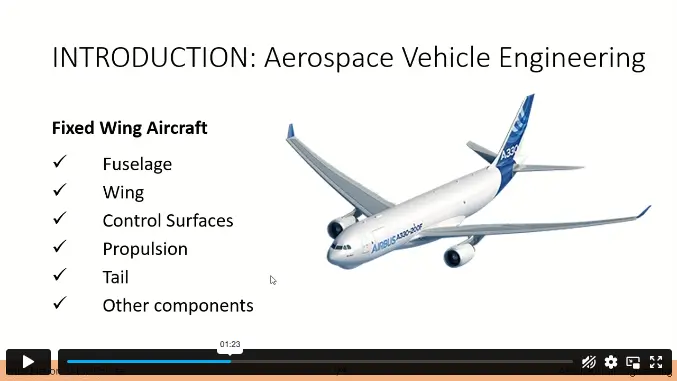
This aircraft engineering course covers aerodynamics, lift, drag, aircraft components, jet propulsion, control surfaces, performance and range optimisation. It suits learners exploring aerospace technician, aircraft maintenance assistant, CAD, manufacturing, aviation operations or quality inspection routes. Build confidence in how aircraft fly, how systems work and how missions need shape design.

Key Benefits Included

► Accredited by CPD
► Instant Access
► 24/7 Learning Assistance
► Self-paced learning and laptop, tablet, smartphone-friendly
► Fully online, interactive course with audio voiceover
► Developed by qualified professionals in the field

Sneak Peek

Learning Outcomes

This course helps learners explore how aircraft fly, how engineering systems work and how design choices affect aviation performance.

By the end of this course, learners will be able to:

► Recognise the fundamentals of aerospace engineering and aircraft design.
► Identify the main elements and functions of an aircraft.
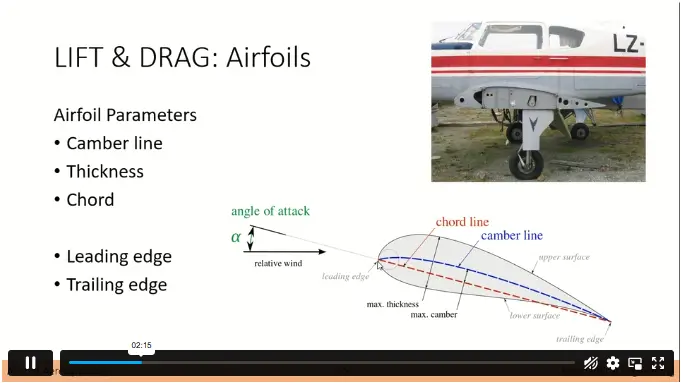
► Explain how lift, drag, thrust and weight affect aircraft flight.
► Compare general aviation, commercial aviation and military aircraft.
► Describe aerodynamics concepts including turbulence, stall and high-lift devices.

Who is This Course For?

This course suits learners who want clear aviation engineering knowledge without needing previous aircraft or aerospace qualifications.

This course is suitable for:

► Beginners interested in aircraft engineering and aerospace design.
► Aviation enthusiasts who want to understand how aeroplanes fly.
► Engineering learners exploring flight mechanics
► Students considering aerospace or mechanical engineering
► Job seekers building knowledge for aviation support or technical pathways.

Certification

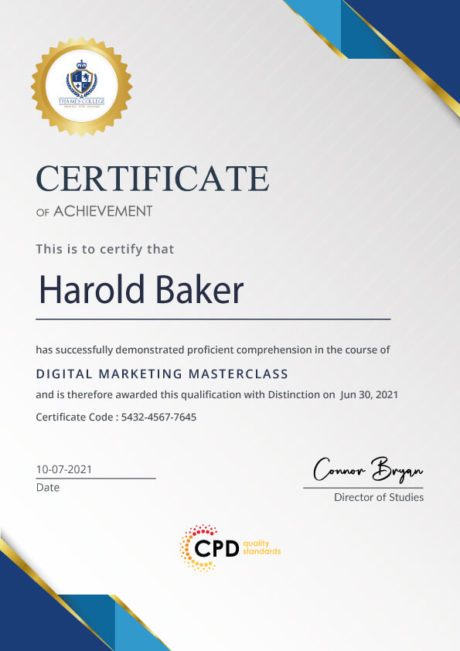
CPD Certification

After successfully completing the assessment of this course, you can apply for the CPD accredited certificates.
PDF certificate: £9.99
Hardcopy certificate: £15.99

Career Opportunities

This course supports aviation, aerospace, engineering design and technical support pathways. UK salaries commonly range from £26,000–£60,000, depending on role, qualifications and experience.

► Aerospace Engineer: £27,000–£60,000 per year.
► Aerospace Engineering Technician: £26,000–£45,000 per year.
► Aircraft Maintenance Engineer: £32,500–£69,000 per year.
► Aircraft Maintenance Assistant: £22,961–£26,049 per year.
► Aircraft Maintenance Technician: £26,000–£45,000 per year.

Course Curriculum

The course covers a wide range of essential topics, including:

► Presentation of the Course
► Course Structure
► Introduction to Airplanes and their Main Elements

► General Aviation
► Commercial Aviation
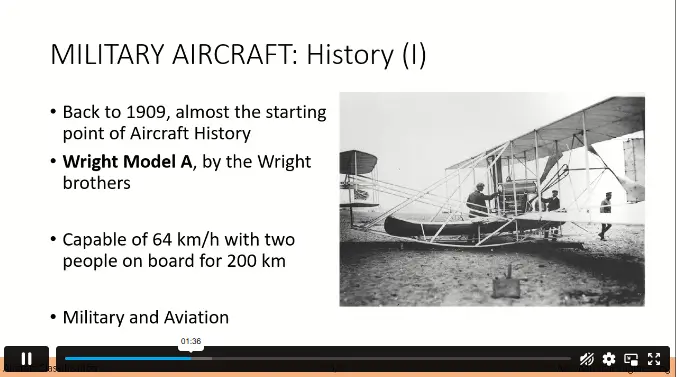
► Military Aircraft

► Airplane Forces and Trajectory
► Lift and Drag: Newton’s 3rd Law and Bernoulli
► 3D Wings Lift and Drag
► High Lift Devices
► Turbulence and Stall

► Engines Overview
► Inlets
► Compressors
► Turbines and Nozzles
► TurboJet vs. Turbofan Review

► Gravity Center and Pressure Center: Stability
► Control Surfaces of an Aircraft and Maneuvers

► Definition of Weights
► Range of an Aircraft as function of Weight
► Optimization of Range – Breguet Equations

Excellent

4.7 Average - 9 Reviews

★ Reviews
Victoria Langham
A clear and interesting course for understanding aviation basics. The modules on aerodynamics, jet engines, flight mechanics, and aircraft performance were especially useful.
Oliver Kingsley
Well-structured and easy to follow. I liked how the course explained airplane classification, propulsion, and performance in a simple way for aviation beginners.

Course Curriculum

Introduction
Presentation of the Course 00:03:00
Course Structure 00:04:00
Introduction to Airplanes and their Main Elements 00:06:00
Classification of Airplanes
General Aviation 00:04:00
Commercial Aviation 00:04:00
Military Aircraft 00:06:00
Aerodynamics
Airplane Forces and Trajectory 00:07:00
Lift and Drag: Newton’s 3rd Law and Bernoulli 00:16:00
3D Wings Lift and Drag 00:18:00
High Lift Devices 00:15:00
Turbulence and Stall 00:13:00
Airplane Propulsion Engines (JETs)
Engines Overview 00:06:00
Inlets 00:07:00
Compressors 00:10:00
Turbines and Nozzles 00:05:00
TurboJet vs. Turbofan Review 00:21:00
Flight Mechanics
Gravity Center and Pressure Center: Stability 00:13:00
Control Surfaces of an Aircraft and Maneuvers 00:10:00
Aircraft Performance
Definition of Weights 00:08:00
Range of an Aircraft as function of Weight 00:14:00
Optimization of Range – Breguet Equations 00:17:00
Assignment
Assignment -Aircraft and Airplane Engineering: Basic to Advanced 00:00:00

Certificate of Achievement

Upon completion, you will receive a CPD-accredited certificate recognised globally. Choose from:

Pdf Certificate & Transcript  £7.99
Hardcopy Certificate & Transcript  £17.99

This certification validates your knowledge and skills, boosting your employability in healthcare.

Course Reviews

  • 5 stars 0
  • 4 stars 0
  • 3 stars 0
  • 2 stars 0
  • 1 stars 0

5

5
1 ratings
1. What is Aircraft and Airplane Engineering: Basic to Advanced? +

Aircraft and Airplane Engineering: Basic to Advanced is an online aviation engineering course covering aircraft classification, aerodynamics, jet propulsion, flight mechanics, stability, control surfaces, aircraft performance and range optimisation for learners interested in aircraft design and aerospace concepts.

2. Is this aircraft engineering course suitable for beginners? +

Yes, this aircraft engineering course is suitable for beginners who want to understand aviation and aircraft design fundamentals. It introduces airplane categories, flight forces, aerodynamics, propulsion engines, flight mechanics and performance topics in a structured online format.

3. What will I learn in this aircraft engineering course? +

You will learn about aircraft types, airplane forces, lift, drag, wings, turbulence, stall, jet engines, stability, control surfaces, flight mechanics, aircraft performance, weight definitions and range optimisation used in basic aircraft engineering and aviation study.

4. Does this course cover aerodynamics? +

Yes, the course covers aerodynamics topics such as lift, drag, airplane forces, flight trajectory, wing behaviour, high-lift devices, turbulence and stall. These topics help learners understand how air movement affects aircraft performance and flight control.

5. Can this course help me become an aerospace engineer? +

This course can support background knowledge in aircraft and aerospace engineering, but it does not replace a degree, apprenticeship, licence or regulated qualification. It is best used for introductory learning, CV development or further study preparation

top