


Ansible for DevOps Engineers and System Admins
Overview Many IT teams struggle with slow server management, repeated manual tasks, and configuration errors that waste time and create …
4.7
4.7 Rating ( 2 Reviews )  0 Students
 0 Students
Bestseller
Great Service
Highly Rated
Trending




Course Curriculum
| Introduction | |||
| What do we cover | 00:02:00 | ||
| What & Why Ansible | 00:04:00 | ||
| How Ansible works | 00:04:00 | ||
| Prepare Ansible Lab Environment | |||
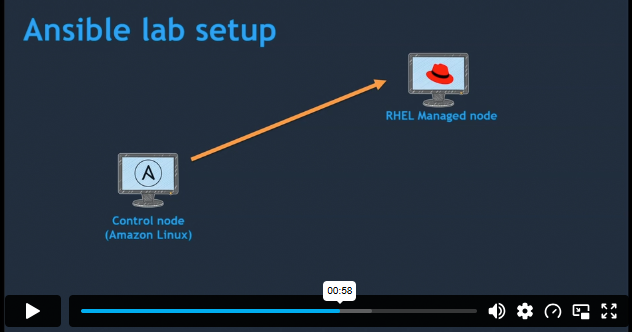
| Ansible Lab Overview | 00:01:00 | ||
| Prepare Ansible System on AWS | 00:10:00 | ||
| Install Ansible on AWS EC2 instance | 00:05:00 | ||
| Setup RHEL as Ansible Managed node | 00:05:00 | ||
| Add RHEL Managed Node to Ansible | 00:07:00 | ||
| Ansible Components | |||
| Ansible Ad-hoc Commands | 00:08:00 | ||
| Ansible Inventory | 00:11:00 | ||
| Ansible Configuration File – Ansible.cfg | 00:14:00 | ||
| Ansible Modules | 00:04:00 | ||
| Ansible Playbooks | |||
| Create your first Ansible playbook | 00:10:00 | ||
| Setup Additional Managed Nodes | 00:15:00 | ||
| Run a Ansible Playbook | 00:09:00 | ||
| Modules | |||
| Yum Module – Install packages | 00:08:00 | ||
| File Module – create/remove a file/directory | 00:07:00 | ||
| Copy Module – Copy a file on to managed nodes | 00:06:00 | ||
| Multitask Ansible Playbooks | |||
| Install Apache on RHEL | 00:12:00 | ||
| Install Apache on Ubuntu | 00:05:00 | ||
| Notify and Handlers | |||
| Notify and Handlers in a Playbook | 00:04:00 | ||
| Gather Facts | |||
| How Gather Facts Works | 00:06:00 | ||
| Conditions | |||
| When Condition | 00:09:00 | ||
| Uninstall Apache Using When Condition | 00:04:00 | ||
| Adding Copy Task to Apache Playbook | 00:05:00 | ||
| Lists and With_items | 00:06:00 | ||
| Ansible Variables | |||
| Ansible variables | 00:11:00 | ||
| Additional Concepts | |||
| Convert Shell Commands into a Ansible Playbook | 00:14:00 | ||
| Using Tags in a Playbook | 00:04:00 | ||
| Error Handling in a Playbook | 00:05:00 | ||
| Ansible Vault | |||
| Ansible vault introduction | 00:08:00 | ||
| Using ansible vault with git | 00:12:00 | ||
| Ansible Roles | |||
| Ansible Roles Introduction | 00:07:00 | ||
| Adding More Tasks to Playbook – Lab | 00:18:00 | ||
| Convert a Playbook into a Role – Lab | 00:17:00 | ||
| Push Your Playbooks on to Github | 00:05:00 | ||
| Conclusion | |||
| Conclusion | 00:01:00 | ||
| Assignment | |||
| Assignment – Ansible for DevOps Engineers and System Admins | 00:00:00 | ||

1. What is Ansible used for in DevOps? +
Ansible is used for automation, server configuration, and infrastructure management.
2. Is this course suitable for beginners? +
Yes, the course starts with basic Ansible concepts before moving to advanced topics.
3. Do I need coding experience for this course? +
No, basic IT knowledge is helpful, but advanced coding skills are not required.
4. Will I learn how to automate server tasks? +
Yes, the course teaches playbooks, modules, and workflow automation methods.
5. Can system administrators benefit from this course? +
Yes, the course is designed for both DevOps engineers and system admins.
£24.99
Exclusive Deal! 92% Off, Today Only!
Offer Ends Soon
 Take All courses for £49

This course includes:
 Access
 Level
Level
 Number of Units
 Duration
 Course Type
- £24.99
- 1 year
- Intermediate
- Number of Units38
- Number of Quizzes0
- 4 hours, 43 minutes Gift this course
 14-Day Money-Back Guarantee
£24.99
/Unit Price
Exclusive Deal! 95% Off, Today Only!
Discounted Total:£120.00
Quantity:
Buying more than one of the same courses?
- 50% discount for orders of 10+ courses
- 60% discount for orders of 50+ courses
- 70% discount for orders of 100+ courses
Looking for a more personalised package?
Contact Us Now