


Az 900 – Azure Fundamentals
Overview UK employers are moving steadily into cloud, with ONS reporting that 69% of UK firms used cloud-based computing systems …
 67 Students
Course Curriculum
| Course Introduction | |||
| Introduction | 00:04:00 | ||
| Module 1 : Cloud Concepts | |||
| What is Cloud Computing – I | 00:05:00 | ||
| What is Cloud Computing – II | 00:06:00 | ||
| Benefits of Cloud Computing | 00:09:00 | ||
| Key Concepts and Terminology | 00:06:00 | ||
| Economies of Scale | 00:01:00 | ||
| CapEx Vs OpEx | 00:03:00 | ||
| Cloud Models : What is Public Cloud | 00:02:00 | ||
| Cloud Models : Characteristics of Public Cloud | 00:02:00 | ||
| Cloud Models : What is Private Cloud | 00:01:00 | ||
| Cloud Models : Characteristics of Private Cloud | 00:01:00 | ||
| Cloud Models : Hybrid Cloud | 00:01:00 | ||
| Cloud Models : Characteristics of Hybrid Cloud | 00:01:00 | ||
| Review and What Next!! | 00:01:00 | ||
| What is IAAS | 00:04:00 | ||
| Use Cases of IAAS | 00:02:00 | ||
| What is PAAS ? | 00:02:00 | ||
| Use Cases of PAAS | 00:04:00 | ||
| What is SAAS ? | 00:02:00 | ||
| Cloud Models : Shared Responsibility Model | 00:09:00 | ||
| Module 2 : Core Azure Services | |||
| Introducation | 00:01:00 | ||
| Azure Regions | 00:01:00 | ||
| Special Azure regions | 00:01:00 | ||
| Region pairs | 00:01:00 | ||
| Feature Availability Region Wise | 00:01:00 | ||
| Availability Zones | 00:01:00 | ||
| Availability Sets | 00:02:00 | ||
| What are Resource Groups? | 00:02:00 | ||
| Azure Resource Manager | 00:01:00 | ||
| What Next!! – Azure Core Services and Products | 00:02:00 | ||
| What is Azure Compute | 00:01:00 | ||
| Azure Virtual Machines – Audiocast Only | 00:01:00 | ||
| Azure Virtual Machines I – LAB | 00:15:00 | ||
| Azure Virtual Machines II – LAB | 00:01:00 | ||
| Azure Virtual Machines III – LAB | 00:02:00 | ||
| Azure Virtual Machines IV – LAB | 00:04:00 | ||
| Azure Virtual Machines V – LAB | 00:03:00 | ||
| Azure Virtual Machines VI – LAB | 00:03:00 | ||
| What are Containers? | 00:04:00 | ||
| Containers ( LAB Activity ) | 00:07:00 | ||
| Containers vs Virtual Machines | 00:04:00 | ||
| What Are Virtual Networks | 00:01:00 | ||
| Virtual Networks – LAB | 00:15:00 | ||
| Azure Load Balancer | 00:01:00 | ||
| VPN Gateway | 00:01:00 | ||
| Azure Application Gateway – I | 00:02:00 | ||
| Azure Application Gateway – II | 00:01:00 | ||
| Azure Content Delivery Networks (CDN’s) | 00:02:00 | ||
| How CDN works ? | 00:03:00 | ||
| Azure CDN – Lab Activity | 00:07:00 | ||
| Azure Storage Services | 00:01:00 | ||
| Structured Data | 00:01:00 | ||
| Semi Structured Data | 00:01:00 | ||
| Unstructured Data | 00:01:00 | ||
| Azure Storage Account – Types | 00:03:00 | ||
| Azure Storage Account – Blob – Lab Activity – I | 00:07:00 | ||
| Azure Storage Account – Blog – Lab Activity – II | 00:07:00 | ||
| Azure Storage Account – Blob – Lab Activity – III | 00:16:00 | ||
| Azure Storage Account – Blog – Lab Activity – IV | 00:09:00 | ||
| Azure Storage Account – Blob – Lab Activity – V | 00:04:00 | ||
| Azure Storage Account – Blob – Lab Activity – VI | 00:07:00 | ||
| Azure Database Services | 00:02:00 | ||
| Azure SQL – Lab Demo | 00:09:00 | ||
| Azure MarketPlace | 00:02:00 | ||
| What is Internet of Things ( IOT ) – Intro | 00:01:00 | ||
| IOT Hub | 00:01:00 | ||
| IOT Hub Demo | 00:09:00 | ||
| Azure Big Data and Analytics | 00:01:00 | ||
| Azure SQL Data Warehouse | 00:01:00 | ||
| Azure HDInsights | 00:01:00 | ||
| Azure Data Lake Analytics | 00:01:00 | ||
| Machine Learning | 00:02:00 | ||
| Azure Machine Learning Services and Studio | 00:02:00 | ||
| What is Server less Computing ? | 00:02:00 | ||
| The concept of DevOps | 00:03:00 | ||
| Azure Management Tools | 00:01:00 | ||
| Creating Resources with Powershell – Lab Activity | 00:05:00 | ||
| Creating Resources with Azure CLI – Lab Activity | 00:07:00 | ||
| Provision Resources using Cloud Shell – Lab Activity | 00:05:00 | ||
| Deployment with JSON – Lab Activity | 00:08:00 | ||
| Azure Advisor | 00:01:00 | ||
| Module 2 : What did we learn | 00:01:00 | ||
| Module 3 Security, Privacy, Compliance and Trust | |||
| What to expect in Module 3 | 00:01:00 | ||
| Azure Firewalls | 00:02:00 | ||
| Azure Firewall – Lab Activity – notes | 00:02:00 | ||
| Azure Firewall – Lab Activity | 00:19:00 | ||
| Azure DDOS | 00:02:00 | ||
| Network Security Groups | 00:03:00 | ||
| Application Security Groups | 00:02:00 | ||
| Which Network Security Solution to choose from ? | 00:04:00 | ||
| AuthZ and AuthN | 00:01:00 | ||
| Azure Active Directory | 00:02:00 | ||
| Multi Factor Authentication | 00:02:00 | ||
| Azure Security Center | 00:02:00 | ||
| Azure Security center – LAB activity | 00:08:00 | ||
| Azure Key Vault | 00:02:00 | ||
| Azure Information Protection | 00:02:00 | ||
| Azure Advanced Threat Protection | 00:04:00 | ||
| What is Azure Policy | 00:03:00 | ||
| Azure Policy – Lab Activity | 00:06:00 | ||
| Azure Role Based Access Control ( RBAC ) | 00:02:00 | ||
| Azure Role Based Access Control ( RBAC ) – Lab Activity | 00:07:00 | ||
| Azure Locks | 00:01:00 | ||
| Azure Locks – Lab Activity | 00:02:00 | ||
| Azure Blueprints | 00:01:00 | ||
| Subscription Governance | 00:02:00 | ||
| Azure Tags | 00:03:00 | ||
| Azure Monitoring | 00:02:00 | ||
| Azure Monitor- Lab Activity | 00:03:00 | ||
| Azure Service Health | 00:01:00 | ||
| Monitoring Applications and Services | 00:04:00 | ||
| Compliance Terms and Requirements | 00:02:00 | ||
| Microsoft Privacy Statement | 00:01:00 | ||
| Microsoft Trust Center | 00:01:00 | ||
| Service Trust Portal | 00:01:00 | ||
| Azure Government Services | 00:02:00 | ||
| Azure Germany Services | 00:01:00 | ||
| Azure China 21Vianet | 00:02:00 | ||
| Module 4 : Azure Pricing and Support | |||
| Module 4 Introduction : What t̥o expect in this module | 00:02:00 | ||
| Azure Subscriptions | 00:06:00 | ||
| What are Management Groups | 00:01:00 | ||
| Purchase Azure Product & Services : Available Options | 00:01:00 | ||
| Usage Metrics | 00:01:00 | ||
| Factors Affecting Costs | 00:02:00 | ||
| The concept of Zones for Billing | 00:02:00 | ||
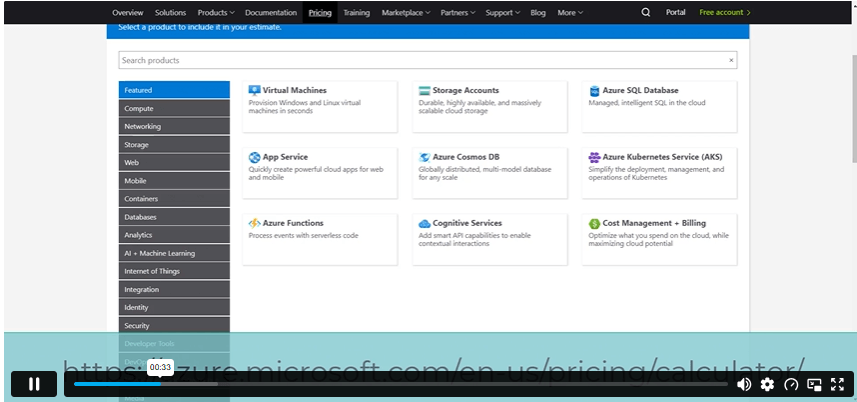
| Azure Pricing Calculator | 00:04:00 | ||
| Azure Total Cost of Ownership ( TCO ) | 00:02:00 | ||
| Ways to Minimize Costs in Azure | 00:04:00 | ||
| Azure Cost Management | 00:02:00 | ||
| Azure Support Plans | 00:03:00 | ||
| Alternative Support Options | 00:02:00 | ||
| Service Level Agreements ( SLA’s ) | 00:03:00 | ||
| Composite SLA’s | 00:03:00 | ||
| Improving Application SLA’s | 00:04:00 | ||
| Public and Preview Features | 00:01:00 | ||
| Providing Feedback | 00:01:00 | ||
| General Availability | 00:01:00 | ||
| Azure Updates , Announcements and Roadmaps | 00:01:00 | ||
| Course Conclusion | |||
| Course Conclusion | 00:01:00 | ||
| Assignment | |||
| Assignment -Az 900 – Azure Fundamentals | 00:00:00 | ||
AZ-900 Azure Fundamentals is a beginner-level Microsoft Azure course covering cloud concepts, Azure services, security, compliance, pricing, support and governance. It helps learners build cloud knowledge for IT, business technology and future Azure learning routes.
Yes, AZ-900 is designed for beginners, including non-technical learners. It starts with cloud computing basics before moving into Azure architecture, core services, management tools, pricing, security and governance concepts in a foundation-level way.
This course supports AZ-900 exam preparation by covering major Azure Fundamentals topics, including cloud concepts, Azure services, pricing, security, management and governance. Learners should still check Microsoft’s latest exam guide before booking the official exam.
No, completing this course does not automatically give Microsoft certification. To earn Microsoft Certified: Azure Fundamentals, learners must follow Microsoft’s official certification process and pass the required AZ-900 exam.
AZ-900 can support learning routes linked to IT support technician, service desk analyst, cloud support technician, junior cloud administrator, technical support assistant, systems support worker and entry-level cloud career pathways.
Exclusive Deal! 95% Off, Today Only!
Offer Ends Soon
 Take All courses for £49

 Access
 Level
Level
 Number of Units
 Duration
 Course Type
- Original price was: £425.00.£25.00Current price is: £25.00.
- 1 year
- Intermediate
- Number of Units140
- Number of Quizzes0
- 7 hours, 11 minutes Gift this course
 14-Day Money-Back Guarantee
Exclusive Deal! 95% Off, Today Only!
Discounted Total:- 50% discount for orders of 10+ courses
- 60% discount for orders of 50+ courses
- 70% discount for orders of 100+ courses