


Canine Communication
Overview The UK has over 13.5 million dogs, making better canine communication knowledge increasingly valuable for owners, trainers and animal …
 245 Students



CPD Accredited
All of our courses meet recognised CPD Quality Standards, supporting high-quality learning and ongoing professional development.
QLS Endorsed
The Quality Licence Scheme (QLS) is a recognised accreditation framework that endorses high-quality, non-regulated training courses across a wide range of industries.

Association of Healthcare Trainers
The Association of Healthcare Trainers (AoHT) supports excellence in healthcare education by helping training providers deliver up-to-date, industry-focused learning and maintain strong professional standards..

UKRLP Registered
UKRLP registration demonstrates commitment to recognised training and education standards, helping organisations build trust, improve credibility, and showcase their presence within the UK learning and skills sector.
Course Curriculum
| Module 01. Introduction to Canine Evolution | |||
| Introduction to Canine Evolution | 00:28:00 | ||
| Module 02. Introduction to Canine Intelligence | |||
| Introduction to Canine Intelligence | 00:12:00 | ||
| Module 03. The Importance of Socialisation | |||
| The Importance of Socialisation | 00:40:00 | ||
| Module 04. Canine Communication | |||
| Canine Communication | 00:41:00 | ||
| Module 05. Canine Psychology | |||
| Canine Psychology | 00:17:00 | ||
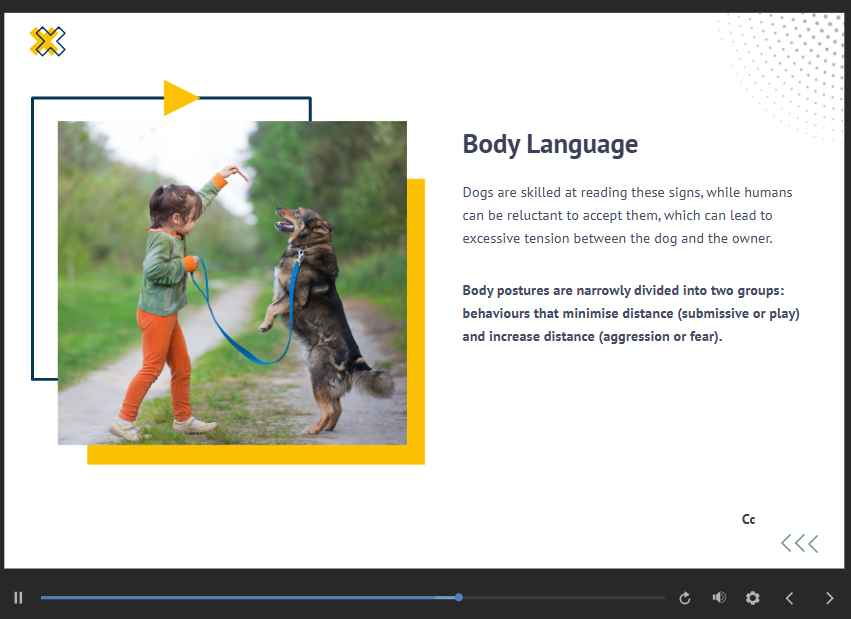
| Module 06. Dog Communication and Body Language | |||
| Dog Communication and Body Language | 00:16:00 | ||
| Module 07. Communication Between Dogs and Human | |||
| Communication Between Dogs and Human | 00:16:00 | ||
| Module 08. Canine Emotions and Signs of Suffering | |||
| Canine Emotions and Signs of Suffering | 00:27:00 | ||
| Module 09. The Role of a Dog Owner | |||
| The Role of a Dog Owner | 00:23:00 | ||
| Module 10. Essential Skills for Working With Dogs | |||
| Essential Skills for Working with Dogs | 00:20:00 | ||
| Mock Exam | |||
| Mock Exam – Canine Communication | 00:20:00 | ||
| Final Exam | |||
| Final Exam – Canine Communication | 00:20:00 | ||
| Assignment | |||
| Assignment – Canine Communication | 2 weeks, 1 day | ||

The Canine Communication Course UK is an online course that teaches learners about dog behaviour, body language, canine emotions, socialisation, communication signals and human-dog interaction. It helps learners understand dogs better for pet care, handling, training and animal support.
Yes, this canine communication course is suitable for beginners. Learners do not need previous animal care experience and can start by learning canine behaviour basics, body language, socialisation, emotions and communication between dogs and humans.
You will learn about canine evolution, intelligence, socialisation, psychology, dog communication, body language, emotions, signs of suffering, owner responsibilities and human-dog relationships. These topics help learners develop better awareness of canine behaviour and communication methods.
Yes, the course covers dog body language and communication. Learners explore how posture, movement, facial expressions and behaviour signals can provide insights into canine emotions, helping them understand dogs during handling, training and everyday interactions.
This course can support knowledge for roles such as Dog Trainer, Animal Care Worker, Kennel Assistant, Dog Handler, Pet Care Assistant and Canine Behaviour Assistant. Some professional roles may require additional qualifications, practical experience and industry training.
Exclusive Deal! 95% Off, Today Only!
Offer Ends Soon
 Take All courses for £49

 Access
 Level
Level
 Number of Units
 Duration
 Course Type
- £19.99
- 1 year
- Level 4
- Number of Units11
- Number of Quizzes2
- 2 weeks, 1 day Gift this course
 14-Day Money-Back Guarantee
Exclusive Deal! 95% Off, Today Only!
Discounted Total:- 50% discount for orders of 10+ courses
- 60% discount for orders of 50+ courses
- 70% discount for orders of 100+ courses