


Cat Behavior Rectification & Cat Health Care
Overview The UK has around 10.2 million owned cats, showing how important informed feline care is for households and pet …
 238 Students



CPD Accredited
All of our courses meet recognised CPD Quality Standards, supporting high-quality learning and ongoing professional development.

QLS Endorsed
The Quality Licence Scheme (QLS) is a recognised accreditation framework that endorses high-quality, non-regulated training courses across a wide range of industries.

Association of Healthcare Trainers
The Association of Healthcare Trainers (AoHT) supports excellence in healthcare education by helping training providers deliver up-to-date, industry-focused learning and maintain strong professional standards..

UKRLP Registered
UKRLP registration demonstrates commitment to recognised training and education standards, helping organisations build trust, improve credibility, and showcase their presence within the UK learning and skills sector.
Course Curriculum
| Introduction | |||
| Course Introduction | 00:02:00 | ||
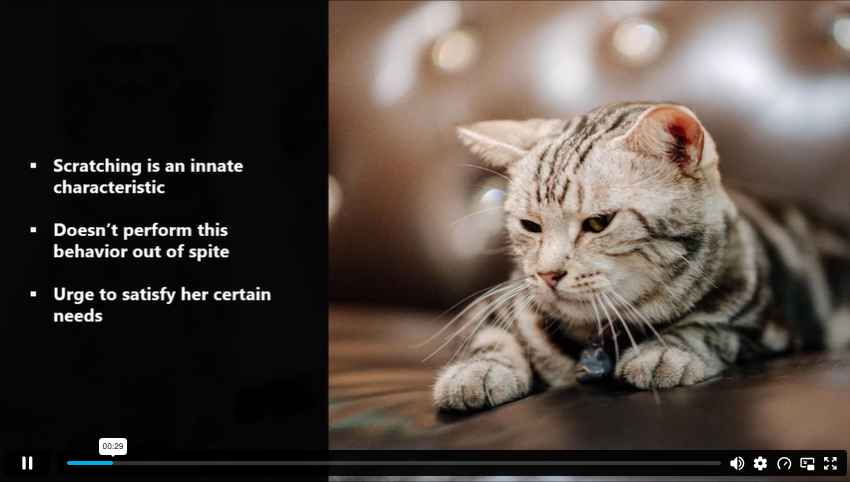
| Cat Behavior Issue 1: Scratching Behavior | |||
| Scratching Behavior | 00:07:00 | ||
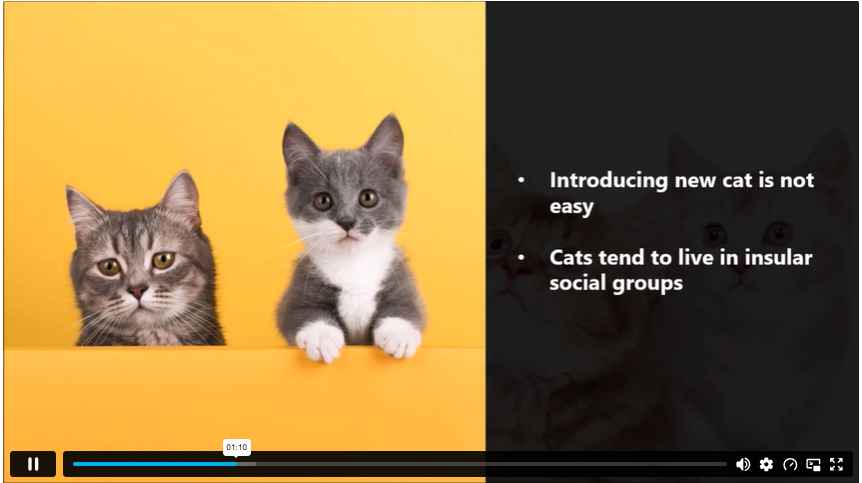
| Cat Behavior Issue 2: Intercat Aggression | |||
| Intercat Aggression | 00:05:00 | ||
| Cat Behavior Issue 3: Attention Seeking Behavior | |||
| Attention Seeking Behavior | 00:08:00 | ||
| Cat Behavior Issue 4: Petting Induced Aggression | |||
| Petting Induced Aggression | 00:05:00 | ||
| Cat Behavior Issue 5: Redirected Aggression | |||
| Redirected Aggression | 00:07:00 | ||
| Cat Behavior Issue 6: Separation Anxiety | |||
| Separation Anxiety | 00:08:00 | ||
| Cat Behavior Issue 7: Obsessive Compulsive Disorder (OCD) | |||
| Obsessive Compulsive Disorder (OCD) | 00:05:00 | ||
| Cat Behavior Issue 8: Urine Marking | |||
| Urine Marking | 00:09:00 | ||
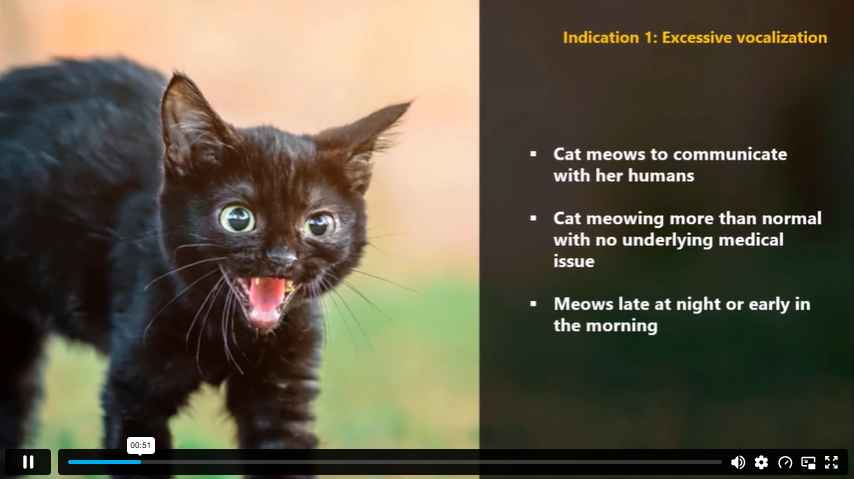
| Cat Behavior Issue 9: Excessive Vocalisation | |||
| Excessive Vocalisation | 00:08:00 | ||
| Cat Behavior Issue 10: Spilling Water | |||
| Spilling Water | 00:04:00 | ||
| Cat Behavior Issue 11: Destructive Chewing | |||
| Destructive Chewing | 00:05:00 | ||
| Cat Behavior Issue 12: Fear in Cats | |||
| Fear in Cats | 00:09:00 | ||
| Cat Behavior Issue 13: Play Aggression | |||
| Play Aggression | 00:07:00 | ||
| Cat Health Problem 1: Seizures | |||
| 1.1 Seizures: Ways to Identify | 00:02:00 | ||
| 1.2 Seizures: Causes | 00:02:00 | ||
| 1.3 Seizures: Ways to Manage | 00:02:00 | ||
| 1.4 Seizures: Preventive Measures | 00:01:00 | ||
| Cat Health Problem 2: Obesity | |||
| 2.1 Obesity: Ways to Identify | 00:02:00 | ||
| 2.2 Obesity: Health Consequences | 00:01:00 | ||
| 2.3 Obesity: Causes | 00:01:00 | ||
| 2.4 Obesity: Ways to Manage | 00:02:00 | ||
| Cat Health Problem 3: Hearing Loss | |||
| 3.1 Hearing Loss: Ways to Identify | 00:02:00 | ||
| 3.2 Hearing Loss: Causes | 00:02:00 | ||
| 3.3 Hearing Loss: Ways to Manage | 00:03:00 | ||
| 3.4 Hearing Loss: Preventive Measures | 00:01:00 | ||
| Cat Health Problem 4: Feline Cognitive Dysfunction (FCD) / Memory Loss | |||
| 4.1 FCD / Memory Loss: Ways to Identify | 00:05:00 | ||
| 4.2 FCD / Memory Loss: Causes | 00:01:00 | ||
| 4.3 FCD / Memory Loss: Ways to Manage | 00:04:00 | ||
| Cat Health Problem 5: Urinary Incontinence | |||
| 5.1 Urinary Incontinence: Ways to Identify | 00:01:00 | ||
| 5.2 Urinary Incontinence: Causes | 00:01:00 | ||
| 5.3 Urinary Incontinence: Ways to Manage | 00:03:00 | ||
| Cat Health Problem 6: Arthritis / Joint Pain | |||
| 6.1 Arthritis / Joint Pain: Ways to Identify | 00:03:00 | ||
| 6.2 Arthritis/ Joint Pain: Causes | 00:01:00 | ||
| 6.3 Arthritis: Ways to Manage | 00:04:00 | ||
| Cat Health Problem 7: Vision Loss | |||
| 7.1 Vision Loss: Ways to Identify | 00:05:00 | ||
| 7.2 Vision Loss: Causes | 00:01:00 | ||
| 7.3 Vision Loss: Ways to Manage | 00:03:00 | ||
| 7.4 Vision Loss: Preventive Measures | 00:01:00 | ||
| Cat Health Problem 8: Diabetes | |||
| 8.1 Diabetes: Ways to Identify | 00:03:00 | ||
| 8.2 Diabetes: Ways to Manage | 00:02:00 | ||
| Cat Health Problem 9: Cancer | |||
| 9.1 Cancer: Ways to Identify | 00:02:00 | ||
| 9.2 Cancer: Causes | 00:03:00 | ||
| 9.3 Cancer: Preventive Measures | 00:02:00 | ||
| Cat Health Problem 10: Dental Diseases | |||
| 10.1 Dental Diseases: Ways to Identify | 00:03:00 | ||
| 10.2 Dental Diseases: Preventive Measures | 00:02:00 | ||
| Cat Health Problem 11: Fatty Liver Disease | |||
| 11.1 Fatty Liver Disease: Ways to Identify | 00:02:00 | ||
| 11.2 Fatty Liver Disease: Causes | 00:02:00 | ||
| 11.3 Fatty Liver Disease: Ways to Manage | 00:01:00 | ||
| 11.4 Fatty Liver Disease: Preventive Measures | 00:02:00 | ||
| Cat Health Problem 12: Heart Diseases | |||
| 12.1 Heart Diseases: Ways to Identify | 00:02:00 | ||
| 12.2 Heart Diseases: Causes | 00:02:00 | ||
| 12.3 Heart Diseases: Preventive Measures | 00:01:00 | ||
| Cat Health Problem 13: Hyperthyroidism | |||
| 13.1 Hyperthyroidism: Ways to Identify | 00:03:00 | ||
| 13.2 Hyperthyroidism: Causes | 00:01:00 | ||
| 13.3 Hyperthyroidism: Ways to Manage | 00:01:00 | ||
| Cat Health Problem 14: Kidney Diseases | |||
| 14.1 Kidney Diseases: Ways to Identify | 00:02:00 | ||
| 14.2 Kidney Diseases: Health Consequences | 00:02:00 | ||
| 14.3 Kidney Diseases: Causes | 00:01:00 | ||
| 14.4 Kidney Diseases: Ways to Manage | 00:02:00 | ||
| Cat Health Problem 15: Lactose Intolerance | |||
| 15.1 Lactose Intolerance: Ways to Identify and Causes | 00:02:00 | ||
| 15.2 Lactose Intolerance: Ways to Manage | 00:03:00 | ||
| Cat Health Problem 16: Feline Distemper Disease (Vaccination) | |||
| 16.1 Feline Distemper Disease: Causes | 00:02:00 | ||
| 16.2 Feline Distemper Disease: Health Consequences | 00:01:00 | ||
| 16.3 Feline Distemper Disease: Ways to Manage | 00:01:00 | ||
| 16.4 Feline Distemper Disease: Preventive Measures | 00:02:00 | ||
| Cat Health Problem 17: Rabies | |||
| 17.1 Rabies: Ways to Identify | 00:03:00 | ||
| 17.2 Rabies: Management & Prevention | 00:04:00 | ||
| Conclusion: Ways to Boost Immunity of your Cat | |||
| Ways to Boost Immunity of your Cat | 00:03:00 | ||
| Course Certification | |||
| Order Your Certificate | 00:00:00 | ||

The Cat Behaviour and Health Care Course UK is an online programme covering common feline behaviour concerns and health awareness. Learners explore scratching, aggression, anxiety, vocalisation, obesity, diabetes, dental conditions, kidney problems and responsible approaches to cat care.
Yes, this course is suitable for beginners, new cat owners, pet sitters and animal care learners. No previous feline behaviour qualification is required, allowing learners to build knowledge gradually through structured online lessons and study materials.
You will learn about scratching, aggression, separation anxiety, fear, urine marking, destructive chewing and excessive vocalisation. The health section introduces seizures, obesity, arthritis, sensory loss, diabetes, dental disease, kidney conditions and age-related changes.
Cat behaviour may change because of stress, fear, pain, environmental changes, limited stimulation, disrupted routines or unmet needs. Careful observation can help owners recognise possible triggers and decide when professional behavioural or veterinary support is appropriate.
No, the course provides educational information and does not replace veterinary examination, diagnosis or treatment. Sudden behaviour changes, pain, seizures, breathing problems, loss of appetite or other concerning symptoms should be discussed with a qualified vet.
Exclusive Deal! 92% Off, Today Only!
Offer Ends Soon
 Take All courses for £49

 Access
 Level
 Number of Units
 Duration
 Course Type
- £19.99
- 1 year
- Intermediate
- Number of Units70
- Number of Quizzes0
- 3 hours, 25 minutes Gift this course
 14-Day Money-Back Guarantee
Exclusive Deal! 95% Off, Today Only!
Discounted Total:- 50% discount for orders of 10+ courses
- 60% discount for orders of 50+ courses
- 70% discount for orders of 100+ courses