
trustpilot

CBT for Eating Disorders

Overview Eating disorders affect many people across the UK, with NHS data showing that referrals for specialist eating disorder services …

4.8 4.8 Rating ( 14 Reviews )
249 Students
Bestseller
Great Service
Highly Rated
i Last Updated: 16th September 2026
◎ English
Flexible Schedule
thumbnail

Unlock 3,000+ Courses & Unlimited Free Digital Certificates for £99 Only! Grab Now

Overview

Eating disorders affect many people across the UK, with NHS data showing that referrals for specialist eating disorder services have increased significantly in recent years. Recognising signs, understanding behaviours and communicating supportively can help create safer pathways for those affected. CBT for Eating Disorders introduces cognitive behavioural therapy approaches for anorexia, bulimia and binge eating disorder through structured online learning.

Explore CBT models, therapeutic relationships, ethics, assessment, goal setting, motivation, anxiety management, beliefs, exposure techniques, behavioural experiments and relapse prevention. Designed for counselling learners, support workers and wellbeing staff, this course builds valuable mental health awareness. 

Completion may support UK pathways such as Mental Health Support Worker, Psychological Wellbeing Practitioner or Counselling roles, alongside further recognised qualifications. Enrol with Thames College today.

Key Benefits Included

► Accredited by CPD
► Endorsed by QLS (Quality Licence Scheme)
► Instant Access
► 24/7 Learning Assistance
► Self-paced learning and laptop, tablet, smartphone-friendly
► Fully online, interactive course with audio voiceover
► Developed by qualified professionals in the field

Sneak Peek

Learning Outcomes

This course develops knowledge of CBT principles, eating disorder assessment, therapeutic communication, behavioural methods, action planning and relapse prevention within supportive settings.

By the end of this course, learners will be able to:

► Explain core CBT principles and their use within eating disorder support.
► Recognise psychological, social, cognitive, and emotional eating disorder factors.
► Describe CBT assessment, goal setting, and motivational methods.
► Identify anxiety, food, shape and weight beliefs affecting eating behaviour patterns.
► Explain exposure, Socratic questioning, and behavioural experiments in CBT.
► Outline action planning, follow-up, and relapse prevention approaches.

Who is This Course For?

This online CBT course welcomes learners interested in eating disorder awareness, mental health support, counselling methods and person-centred communication across care settings.

► Counselling learners studying CBT and eating disorder support methods.
► Mental health workers understanding eating disorder behaviour patterns.
► Wellbeing staff learning assessment and relapse prevention concepts.
► Healthcare learners exploring cognitive and emotional eating factors.
► Practitioners reviewing CBT methods for eating disorders.
► Career changers exploring counselling and psychological wellbeing careers.

Certification

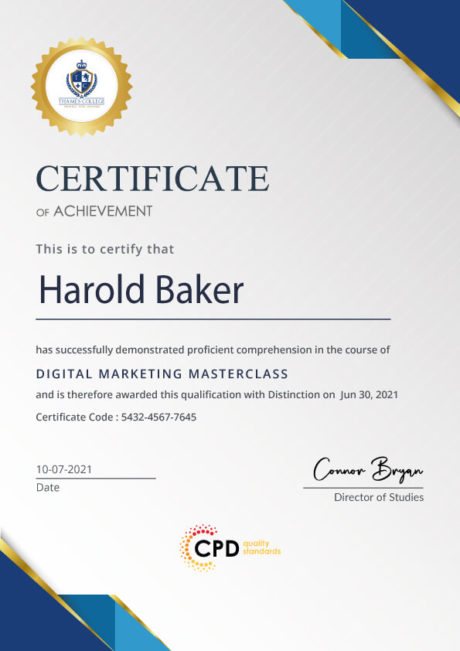
CPD Certification

After successfully completing the assessment of this CBT for Eating Disorders course, you can apply for the CPD accredited certificates.
PDF certificate: £9.99
Hardcopy certificate: £15.99

Endorsed Certificate of Achievement from the Quality Licence Scheme

Upon successful completion of the CBT for Eating Disorders course, you can order an original hardcopy certificate of achievement endorsed by the Quality Licence Scheme. The certificate will be home-delivered, with a pricing scheme of —
► 135 GBP within UK
► 145 GBP for International Delivery — Postal Fees Included

Please Note: Thames College is a One Education approved resale partner for Quality Licence Scheme Endorsed courses

Accreditation

All of our courses, including this course is fully accredited, providing you with up-to-date skills and knowledge and helping you to become more competent and effective in your chosen field.

CPD Accredited

All of our courses meet recognised CPD Quality Standards, supporting high-quality learning and ongoing professional development.
QLS Endorsed

The Quality Licence Scheme (QLS) is a recognised accreditation framework that endorses high-quality, non-regulated training courses across a wide range of industries.
Association of Healthcare Trainers

The Association of Healthcare Trainers (AoHT) supports excellence in healthcare education by helping training providers deliver up-to-date, industry-focused learning and maintain strong professional standards..

UKRLP Registered

UKRLP registration demonstrates commitment to recognised training and education standards, helping organisations build trust, improve credibility, and showcase their presence within the UK learning and skills sector.

Career Opportunities

This course supports learners exploring counselling, wellbeing and mental health careers across the UK, although regulated roles require further qualifications, supervised experience and professional registration.

► Cognitive Behavioural Therapist — Average UK Salary: £40,000–£57,000 per year
► Psychological Wellbeing Practitioner — Average UK Salary: £28,000–£39,000 per year
► Social Worker — Average UK Salary: £32,000–£48,000 per year
► Family Support Worker — Average UK Salary: £24,000–£36,000 per year
► Residential Support Worker — Average UK Salary: £22,000–£30,000 per year
► Social Work Assistant — Average UK Salary: £20,000–£28,000 per year

Course Curriculum

The course covers a wide range of essential topics, including:

► Course Introduction and Overview
► Understanding the Course Structure and Learning Approach
► Introduction to CBT for Eating Disorders

► What Is Cognitive Behavioural Therapy (CBT)?
► Understanding the CBT Model
► NICE Guidelines and Evidence-Based Approaches
► Building Therapeutic Relationships Through Trust and Empathy
► Ethical Principles in Therapy

► Classification and Types of Eating Disorders
► Core Psychopathology of Eating Disorders
► Understanding Co-Morbid Psychiatric Conditions
► Social and Family Influences on Eating Disorders
► Cognitive Factors Affecting Eating Behaviours
► Emotional Factors and Their Impact

► Conducting the First Assessment Session
► Understanding Dietary and Nutritional Challenges
► Setting Collaborative Goals with Clients
► Exploring Motivation and Readiness for Change

► Supporting Clients with Anxiety Management
► Using the Socratic Approach and Questioning Techniques
► Providing Effective Psychoeducation
► Applying Exposure Techniques
► Working with Beliefs About Shape, Weight and Food
► Using Behavioural Experiments in CBT

► Creating and Reviewing Action Plans
► Successfully Concluding Therapy Sessions
► Follow-Up Support and Relapse Prevention Strategies
► Course Summary and Final Reflections

► Additional CBT for Eating Disorders Resources

Excellent

4.8 Average - 14 Reviews

★ Reviews
Thomas Fletcher
I enjoyed the practical focus of this course. The lessons on anxiety, exposure techniques and action planning provided useful knowledge that I can apply within my personal development journey.
Charlotte Wilkinson
A valuable course for anyone interested in mental health awareness. The content on ethics, cognitive factors and treatment planning was informative, detailed and presented in an accessible way.

Course Curriculum

Introduction
CBT Eating Disorders Promo 00:02:00
About the Tuto 00:01:00
About the Course 00:02:00
CBT & Therapeutic principles
What is CBT (the CBT model) 00:06:00
NICE guidelines 00:04:00
The therapeutic alliance, Trust and Empathy 00:07:00
Ethics of the therapy 00:05:00
The Psychology & Causations of Eating Disorders
Eating disorders: Categorisations 00:07:00
Core Psychopathology of Eating Disorders 00:07:00
Co-morbid psychiatric illness 00:07:00
Social and Family factors 00:08:00
Cognitive factors 00:07:00
Emotional factors 00:09:00
The Assessment & Planning
First session – Assessment 00:08:00
Dietary and Nutritional issues 00:06:00
Setting Goals with the client 00:07:00
Motivational factors 00:07:00
CBT in Practice
Working with Anxiety 00:05:00
The Socratic approach (Socratic questioning) 00:06:00
Psychoeducation 00:04:00
The ‘Exposure’ technique 00:07:00
Working with Beliefs (shape, weight, food) 00:07:00
Behavioural Experiments 00:07:00
Reviewing & Wrapping up
Designing and Reviewing Action plans 00:06:00
Concluding therapy successfully 00:04:00
Follow up and Relapse Prevention 00:05:00
Thank you and Good Bye! 00:02:00
Additional Resources
Additional Resources: CBT for Eating Disorders 00:00:00
Mock Exam
Mock Exam – CBT for Eating Disorders 00:20:00
Final Exam
Final Exam – CBT for Eating Disorders 00:20:00
Assignment
Assignment – CBT for Eating Disorders 2 weeks

Certificate of Achievement

Upon completion, you will receive a CPD-accredited certificate recognised globally. Choose from:

Pdf Certificate & Transcript  £7.99
Hardcopy Certificate & Transcript  £17.99

This certification validates your knowledge and skills, boosting your employability in healthcare.

Course Reviews

  • 5 stars 0
  • 4 stars 0
  • 3 stars 0
  • 2 stars 0
  • 1 stars 0

4.9

4.9
10 ratings

No Reviews found for this course.

1. What is CBT for Eating Disorders? +

This online course introduces cognitive behavioural therapy methods related to eating disorder support. Learners explore thought patterns, emotions, behaviours, therapeutic communication, assessment approaches and recovery-focused strategies connected with conditions such as anorexia, bulimia and binge eating disorder.

2. Is CBT for Eating Disorders suitable for beginners? +

Yes, this course is designed for beginners and learners interested in mental health support. It starts with essential CBT concepts before introducing therapeutic principles, assessment methods, behavioural techniques and relapse prevention, making the learning journey accessible without previous specialist experience.

3. What will I learn from a CBT Eating Disorders course? +

Learners study CBT foundations, eating disorder categories, psychological influences, therapeutic relationships, ethics, assessment, goal setting, motivation, anxiety management, exposure techniques, behavioural experiments and prevention strategies. The course develops awareness of how CBT approaches are used within supportive mental health environments.

4. Can I become a CBT therapist after completing this course? +

No, this course alone does not allow learners to practise as qualified CBT therapists. Professional therapy roles usually require accredited qualifications, supervised clinical training and appropriate registration. This programme supports knowledge development and awareness rather than independent therapeutic practice.

5. Will I receive a certificate after completing this CBT course? +

Successful learners may receive certification recognising their completed learning. A certificate can support personal development records, CVs and continued learning portfolios. However, it should not be considered a replacement for regulated qualifications required for professional therapeutic roles.

top