


CBT Training
Overview Mental health challenges affect millions across the UK, with NHS England reporting that around one in five adults experience …
 245 Students



CPD Accredited
All of our courses meet recognised CPD Quality Standards, supporting high-quality learning and ongoing professional development.
QLS Endorsed
The Quality Licence Scheme (QLS) is a recognised accreditation framework that endorses high-quality, non-regulated training courses across a wide range of industries.
Association of Healthcare Trainers
The Association of Healthcare Trainers (AoHT) supports excellence in healthcare education by helping training providers deliver up-to-date, industry-focused learning and maintain strong professional standards..

UKRLP Registered
UKRLP registration demonstrates commitment to recognised training and education standards, helping organisations build trust, improve credibility, and showcase their presence within the UK learning and skills sector.
Course Curriculum
| Module 01: Introduction to CBT | |||
| Introduction to CBT | 00:37:00 | ||
| Module 02: CBT Theories and Principles | |||
| CBT Theories and Principles | 00:50:00 | ||
| Module 03: CBT Tools and Strategies | |||
| CBT Tools and Strategies | 00:49:00 | ||
| Module 04: CBT Process | |||
| CBT Process | 00:50:00 | ||
| Module 05: CBT for Personal Growth | |||
| CBT for Personal Growth | 00:42:00 | ||
| Module 06: Overcoming Anxiety and Depression | |||
| Overcoming Anxiety and Depression | 01:00:00 | ||
| Module 07: CBT for Children with Autism | |||
| CBT for Children with Autism | 00:49:00 | ||
| Assignment | |||
| Assignment – CBT Training | 2 weeks, 1 day | ||
CBT Training is an online programme that introduces cognitive behavioural therapy concepts, including thoughts, emotions, behaviours and structured techniques. Learners explore how CBT principles are used for personal development, wellbeing support and communication across different professional and care-related environments.
Yes, this course is suitable for beginners who want to learn CBT fundamentals. It starts with basic theories before introducing techniques, processes, emotional wellbeing topics and autism-related approaches, allowing learners to build knowledge gradually without needing previous therapy experience.
Learners study CBT theories, principles, tools, strategies and processes. The course also covers personal growth, anxiety, depression, emotional responses and supporting children with autism, helping learners develop awareness of how thoughts and behaviours influence wellbeing.
No, completing this course does not make someone a qualified CBT therapist. Professional therapy roles generally require accredited education, supervised clinical practice and relevant registration. This programme provides introductory knowledge to support further learning and personal development in mental health fields.
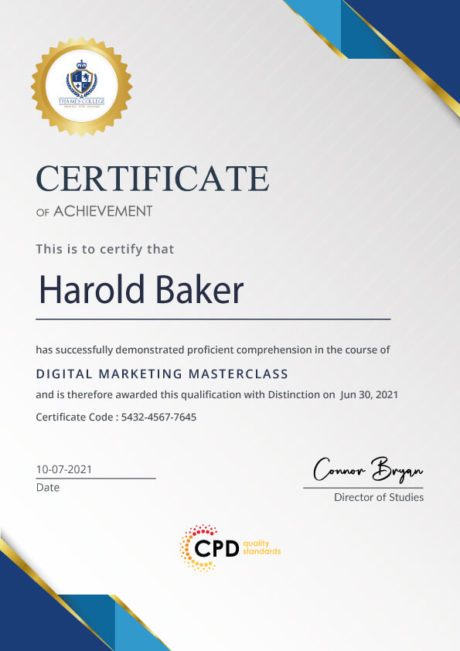
Yes, learners who successfully complete the required assessment may receive certification recognising their completed training. A certificate can support professional development records and CVs, but it does not replace regulated qualifications needed for clinical therapy or healthcare positions.
Exclusive Deal! 92% Off, Today Only!
Offer Ends Soon
 Take All courses for £49

 Access
 Level
Level
 Number of Units
 Duration
 Course Type
- £24.99
- 1 year
- Level 5
- Number of Units8
- Number of Quizzes0
- 2 weeks, 1 day Gift this course
 14-Day Money-Back Guarantee
Exclusive Deal! 95% Off, Today Only!
Discounted Total:- 50% discount for orders of 10+ courses
- 60% discount for orders of 50+ courses
- 70% discount for orders of 100+ courses