
Have you ever thought about why some people find it harder than others to access healthcare support? For many individuals, the challenge is not the lack of available services but the obstacles they experience before they can receive the care they need. These barriers can affect people’s ability to find support, communicate their needs, and take an active role in their healthcare journey.
Imagine David, an older adult living with reduced mobility. He requires regular medical appointments, but reaching the healthcare centre is difficult because of limited transport options. The building is not easily accessible, and the information provided about his treatment is not available in a format he can understand. Although healthcare support exists, several barriers prevent him from receiving the appropriate care.
Situations like David’s happen every day. Barriers in health and social care can be physical, financial, cultural, technological, or related to how services are organised. Understanding these challenges is essential for creating a fair and inclusive care system. In this guide, we will explore what barriers mean, the different types of barriers, their impact on individuals and communities, and how health and social care professionals can help remove these obstacles to provide more person-centred support.
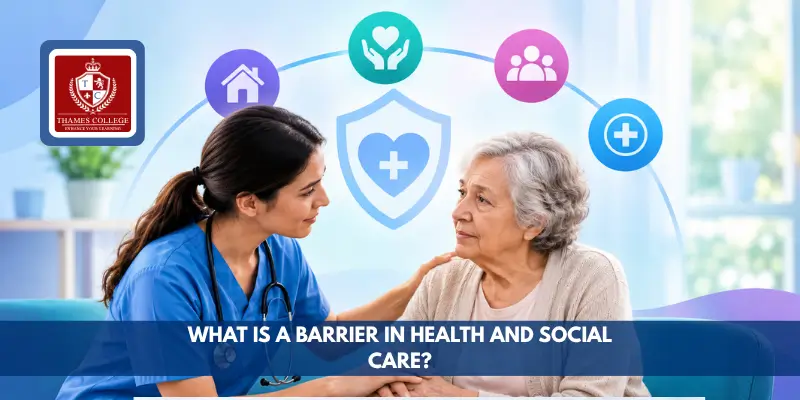
What Is a Barrier in Health and Social Care?
A barrier in health and social care is anything that prevents a person from accessing, understanding, or benefiting from healthcare and support services.
Barriers can affect people in different ways. Some may stop individuals from physically reaching a service, while others may make it difficult for them to communicate their needs or feel comfortable seeking help.
A barrier does not always have to be obvious. While a lack of wheelchair access is an easily recognised physical barrier, other challenges such as fear of discrimination, language difficulties, or lack of digital skills may be less visible but equally important.
For example, a person with limited English may attend a healthcare appointment but struggle to understand important information about their treatment. Similarly, someone who cannot use online systems may find it difficult to book appointments if digital services are the only option available.
In simple terms, barriers create difficulties that prevent people from receiving equal opportunities for healthcare and support.
They can include:
| Type of Barrier | Example |
|---|---|
| Physical barrier | Buildings without ramps or accessible facilities |
| Communication barrier | Language differences or unclear information |
| Financial barrier | Travel costs or difficulties taking time away from work |
| Cultural barrier | Lack of understanding of personal beliefs or values |
| Digital barrier | Difficulty using online healthcare systems |
| Organisational barrier | Long waiting times or complicated procedures |
Recognising these barriers is the first step towards creating healthcare environments where everyone feels supported and included.
Table of Contents
Why Do Barriers Matter in Health and Social Care?
Healthcare should be accessible to everyone, regardless of their background, circumstances, or personal challenges. However, barriers can create inequalities that affect a person’s health, confidence, and overall experience of care.
A small obstacle can sometimes create much bigger problems. For example, missing one appointment because of transport difficulties may result in delayed treatment. A misunderstanding caused by poor communication may affect how someone manages their condition.
When barriers are not addressed, they can lead to:
- Delayed access to healthcare services
- Reduced confidence in healthcare providers
- Increased stress and anxiety
- Poor management of health conditions
- Greater health inequalities
The impact is often greater for people who already face additional challenges, including older adults, people with disabilities, individuals from disadvantaged backgrounds, and those with limited access to resources.
Removing barriers is not only about improving access. It is also about respecting people’s rights, protecting dignity, and ensuring that healthcare decisions consider individual needs.
Are Barriers Always Easy to See?

Not all barriers are visible.
Some challenges are obvious, such as a building without wheelchair access or a lack of transport options. However, many barriers are hidden and may only become clear when someone experiences difficulties accessing care.
For example:
A person may appear physically able to attend appointments but may avoid seeking help because they feel uncomfortable discussing their health concerns due to cultural stigma.
Another individual may have access to online healthcare services but struggle because they lack confidence using digital technology.
Hidden barriers can include:
- Fear of judgement
- Lack of confidence
- Previous negative experiences with healthcare
- Language difficulties
- Low health literacy
- Social isolation
This is why healthcare professionals must look beyond the obvious and consider the individual circumstances of each person.
A person-centred approach means asking:
- What challenges might this individual be experiencing?
- What support would help them access care?
- Are there adjustments that could improve their experience?
The Main Types of Barriers in Health and Social Care
People may experience different barriers depending on their health, environment, personal circumstances, and access to resources.
The main types of barriers include:
- Communication barriers
- Physical barriers
- Financial barriers
- Cultural and social barriers
- Digital barriers
- Organisational barriers
Each barrier can influence how individuals interact with healthcare services and how effectively their needs are met.
Communication Barriers
Communication is one of the foundations of effective health and social care. Professionals need to understand people’s needs, while individuals need clear information to make decisions about their own wellbeing.
However, communication difficulties can create significant barriers.
A person may struggle to access care because information is not provided in a way they can understand.
Common communication barriers include:
- Language differences
- Use of complex medical terminology
- Hearing or speech difficulties
- Lack of interpretation services
- Information that is not available in accessible formats
For example, imagine a patient attending a healthcare appointment after receiving a new diagnosis. The healthcare professional explains the treatment plan using complicated medical terms, but the patient leaves without fully understanding what they need to do next.
The problem is not the absence of care. The problem is that communication has created a barrier between the person and the support they need.
Why Communication Barriers Matter
Poor communication can affect:
- Patient confidence
- Understanding of treatment
- Ability to make informed decisions
- Trust between individuals and professionals
When people do not understand their care, they may feel anxious, confused, or excluded from decisions about their health.
How Can Communication Barriers Be Reduced?
Healthcare professionals can improve communication by:
- Using simple and clear language
- Providing interpreters where necessary
- Offering written information in accessible formats
- Encouraging questions
- Checking understanding before ending conversations
Good communication is not only about providing information. It is about making sure people feel listened to, respected, and involved.
Physical Barriers

Physical barriers relate to obstacles within environments that make it difficult for individuals to access healthcare services or move around safely.
These barriers are particularly important for people with disabilities, older adults, and individuals with mobility challenges.
Examples include:
- Buildings without ramps or lifts
- Narrow entrances
- Poor signage
- Inaccessible toilets
- Limited transport options
Consider someone who uses a wheelchair and needs to attend regular medical appointments. If the healthcare building has stairs but no accessible entrance, the person may struggle to receive essential care.
This type of barrier is not caused by the individual. It is created by an environment that has not considered different needs.
Reducing Physical Barriers
Healthcare organisations can improve accessibility by:
- Creating accessible buildings
- Providing clear signs and directions
- Offering suitable facilities
- Improving transport options
- Designing spaces that support different abilities
Accessible environments allow people to receive care with independence, comfort, and dignity.
Financial Barriers
Health and social care services may be available, but financial challenges can still prevent some people from accessing the support they need. These barriers are not always related to the direct cost of healthcare. Sometimes, additional expenses connected with receiving care can create difficulties.
For example, someone may need to attend regular hospital appointments but struggle with travel costs. Another person may delay seeking support because taking time away from work could affect their income.
Financial barriers can affect people through:
- Travel expenses to healthcare appointments
- Childcare costs during medical visits
- Loss of income from taking time off work
- Costs related to managing long-term health conditions
- Limited access to necessary resources
For individuals already experiencing financial pressure, these additional challenges can make healthcare feel difficult to reach.
Why Financial Barriers Matter
When people delay healthcare because of financial concerns, small health issues can become more serious over time. A person who misses regular check-ups or avoids seeking advice may require more complex support later.
Financial barriers can also affect emotional wellbeing. Constantly worrying about costs while managing a health condition can increase stress and reduce confidence in accessing services.
A fair health and social care system should consider the different circumstances people experience and provide support that allows everyone to access appropriate care.
How Can Financial Barriers Be Reduced?
Health and social care organisations can help by:
- Providing information about available financial support
- Offering flexible appointment options
- Expanding community-based services
- Reducing unnecessary costs linked to accessing care
- Supporting people to understand available resources
By recognising financial challenges, professionals can help ensure that money does not become a reason someone misses out on essential support.
Cultural and Social Barriers

Health and social care are built around people, which means understanding individual values, beliefs, experiences, and backgrounds is essential.
However, cultural and social differences can sometimes create barriers between individuals and healthcare services. These barriers may develop when people feel misunderstood, judged, or unable to express their needs comfortably.
For example, someone may avoid seeking healthcare support because they are worried about discrimination or because their cultural beliefs are not being considered.
Cultural and social barriers can include:
- Fear of stigma or judgement
- Differences in health beliefs
- Lack of cultural awareness
- Discrimination or unconscious bias
- Religious or personal preferences not being respected
These barriers are particularly important because trust plays a major role in healthcare. When individuals do not feel respected, they may be less likely to communicate openly with professionals or seek support when they need it.
How Cultural Barriers Affect Care
A person’s background can influence how they understand health, illness, treatment, and support.
For instance, a healthcare professional may recommend a treatment approach without considering a person’s cultural or religious preferences. Even if the intention is positive, the individual may feel that their views are being ignored.
This can affect:
- Communication
- Trust
- Decision-making
- Willingness to engage with services
Reducing Cultural and Social Barriers
Healthcare professionals can create more inclusive care by:
- Respecting individual beliefs and preferences
- Avoiding assumptions about people’s backgrounds
- Providing equality and diversity training
- Using inclusive communication
- Listening carefully to personal concerns
Effective care is not only about treating health conditions. It is also about understanding the person behind the condition.
Digital Barriers
Technology has changed the way many healthcare services operate. People can now book appointments online, access medical information digitally, and communicate with professionals through virtual services.
However, while digital healthcare provides many benefits, it can also create new barriers for some individuals.
Not everyone has equal access to technology or feels confident using digital systems.
Digital barriers may include:
| Digital Challenge | How It Can Affect People |
|---|---|
| Limited internet access | Difficulty accessing online healthcare services |
| Lack of digital skills | Problems using healthcare websites or applications |
| Poor website accessibility | Challenges for people with visual or cognitive difficulties |
| Lack of digital devices | Reduced ability to access online support |
For example, an older person may need to book an appointment through an online system but struggle because they have limited experience using technology.
Although digital services are designed to improve access, they can unintentionally exclude people who need additional support.
How Can Digital Barriers Be Reduced?
Healthcare providers can support digital inclusion by:
- Keeping telephone and face-to-face options available
- Providing guidance on using online systems
- Designing accessible websites and applications
- Offering support for people with limited digital experience
Technology should make healthcare easier, not create another obstacle between people and the services they need.
Organisational and Systemic Barriers
Some barriers are not created by individuals but by the way healthcare services are organised.
Organisational barriers occur when systems, processes, or structures make it harder for people to receive timely and effective care.
These barriers may include:
- Long waiting times
- Complicated referral processes
- Poor communication between departments
- Limited availability of appointments
- Staff shortages
For example, a person may be referred to a specialist service but experience delays because different departments do not communicate effectively.
The issue is not that support does not exist. The problem is that the system creates difficulties in accessing it.
Why Organisational Barriers Matter
When healthcare systems are difficult to navigate, people may feel frustrated and lose confidence.
This can result in:
- Delayed treatment
- Repeated appointments
- Increased pressure on healthcare professionals
- Poor patient experiences
Efficient systems are important because they allow professionals to spend more time supporting individuals rather than managing unnecessary obstacles.
Improving Organisational Barriers
Healthcare organisations can reduce these challenges by:
- Simplifying processes
- Improving communication between services
- Providing clear information about healthcare pathways
- Supporting staff development
- Creating better coordination between professionals
A well-organised healthcare system benefits both service users and healthcare teams.
The Impact of Barriers in Health and Social Care
Barriers do not only affect access to services. They can influence a person’s physical health, emotional wellbeing, independence, and relationship with healthcare providers.
A single barrier may seem small, but multiple barriers together can create significant challenges.
For example, an older person living alone may experience several difficulties at the same time:
- Limited transport options
- Difficulty using digital services
- Communication challenges
- Financial concerns
Together, these barriers can make accessing care much more difficult.
How Barriers Affect Individuals

Delayed Access to Support
When people experience barriers, they may postpone seeking healthcare advice. This can allow health problems to become more serious.
Increased Stress and Anxiety
Struggling to access care can create feelings of frustration, worry, and uncertainty.
Reduced Independence
When appropriate support is difficult to access, individuals may become more dependent on others.
Loss of Trust
Repeated negative experiences can reduce confidence in healthcare services.
How Barriers Affect Healthcare Systems
Barriers can also create challenges for healthcare organisations.
They may lead to:
- Increased demand for emergency services
- Additional pressure on healthcare professionals
- Longer waiting times
- Greater health inequalities
Reducing barriers benefits everyone by creating a healthcare system that works more effectively.
How Can Health and Social Care Professionals Reduce Barriers?
Health and social care professionals have an important role in identifying and reducing obstacles that affect individuals.
Providing good care is not only about treating medical conditions. It is also about understanding the challenges that may prevent people from receiving support.
Professionals can help by:
1. Providing Person-Centred Communication
Every individual has different communication needs. Professionals should take time to listen, explain clearly, and adapt their approach.
2. Promoting Equality and Inclusion
Respecting different backgrounds, beliefs, and abilities helps create a safer environment where everyone feels valued.
3. Improving Accessibility
Professionals should consider whether services, environments, and information are accessible to different groups of people.
4. Supporting Individuals to Make Decisions
People should be involved in decisions about their care. Providing clear information allows individuals to make informed choices.
5. Working Together
Collaboration between healthcare professionals, families, and support networks can help identify challenges and find effective solutions.
Removing barriers requires teamwork. Small changes in communication, accessibility, and understanding can create a significant improvement in someone’s healthcare experience.
Why Understanding Barriers Is Important for Healthcare Careers
For anyone planning a career in health and social care, understanding barriers is an essential skill.
Healthcare professionals work with people from different backgrounds, each with unique needs and experiences. Recognising barriers helps professionals provide support that is respectful, inclusive, and effective.
This knowledge is particularly valuable for roles such as:
- Healthcare Assistants
- Nursing Assistants
- Care Support Workers
- Residential Care Workers
- Social Care Professionals
Understanding barriers helps professionals:
- Deliver person-centred care
- Build trust with service users
- Improve communication
- Promote equality and dignity
- Support better healthcare experiences
A successful healthcare professional does not only focus on a person’s condition. They also understand the challenges that may affect how someone accesses and experiences care.
Conclusion
Barriers in health and social care can prevent people from receiving the support they need, but they can be reduced through awareness, understanding, and inclusive approaches.
From communication difficulties and physical access issues to financial challenges and digital exclusion, different obstacles can affect a person’s healthcare journey.
Health and social care professionals play an important role in removing these barriers by providing respectful communication, personalised support, and accessible services.
A healthcare system that recognises and responds to barriers is one that creates better experiences, improves equality, and supports the wellbeing of everyone.
FAQs
A barrier in health and social care refers to any obstacle that makes it difficult for a person to access, understand, or benefit from the care and support available to them.
Common barriers in health and social care include communication difficulties, physical limitations, financial challenges, cultural differences, digital issues, and problems within healthcare systems.
Communication barriers may prevent individuals from sharing their needs, understanding important health information, and making informed choices about their treatment and care.
Physical barriers can include inaccessible buildings, limited transportation, unclear signs, and environments that do not meet the needs of people with mobility or accessibility requirements.
Financial barriers may make it difficult for individuals to attend appointments, afford related costs, or continue receiving necessary treatment and support.
Cultural barriers can influence how comfortable people feel when accessing services, communicating with professionals, and receiving care that respects their beliefs and values.
Digital barriers can be addressed by providing accessible technology, offering guidance on digital services, and ensuring alternative ways of accessing care remain available.
Healthcare professionals can reduce barriers by providing inclusive support, adapting their communication methods, recognising individual needs, and creating a more accessible care experience.
Individuals such as older adults, people with disabilities, those facing financial difficulties, and people with communication challenges may experience greater difficulties accessing care.
Reducing barriers helps improve equality, ensures people can access appropriate support, enhances care experiences, and contributes to better health outcomes for individuals and communities.
Still searching for the right course? View All Courses NOW


- All courses
- QLS Endorsed Single Course683
- Management Courses329
- Technology Courses322
- Mega Bundles269
- Business Courses237
- Health Courses213
- Teaching Courses200
- Professional & Personal Growth196
- Creative Courses95
- Law Courses85
- Marketing Courses77
- Counselling Courses71
- Engineering Courses53
- Job Guarantee Programme50
- Arts Courses37
- 4-in-1 bundle32
- QLS Endorsed Single Course with Free Certificate27
- Science Courses26
- Agriculture Courses22
- Regulated Courses7
- Psychology2