



Working in a GP surgery can be a practical way to enter healthcare without first qualifying as a doctor or registered nurse. A GP healthcare assistant supports patients and clinical staff, helping the practice deliver routine care safely and efficiently.
A GP healthcare assistant (HCA) works alongside registered healthcare professionals in a GP surgery. Duties may include checking blood pressure, recording observations, preparing equipment and supporting patients. Entry requirements vary between employers, and new starters may receive workplace training. Clinical responsibilities depend on appropriate training, assessed competence and supervision.
Here’s what the role involves, what employers may expect and how to prepare for your first position.
Table of Contents
What Is a GP Healthcare Assistant?
A GP healthcare assistant is a healthcare support worker who helps deliver patient care in a general practice setting.
Unlike hospital HCAs, who may support patients on wards, GP healthcare assistants usually work within primary care teams. Their responsibilities can combine patient-facing appointments with administrative and practical support.
They work under the guidance of registered healthcare professionals, such as practice nurses and GPs. Although HCAs may carry out certain tasks independently after training, they must work within their assessed competence.
The role can suit someone who enjoys working with people, pays attention to detail and wants to contribute to patient care without immediately pursuing a registered nursing qualification.
Practice Nurse Level 7
Build advanced primary care knowledge, from patient care, wound management and NHS operations to healthcare legislation and nursing responsibilities, for modern UK healthcare settings.Advanced practice nursing skills for UK GP surgeries and primary care.
- 15 Expert-Led Modules15 Modules
- 1 Year Full Access1 Year Access
- Self-Paced Online StudySelf-Paced
★★★★★ Rated 4.8 out of 54.8 / 5 🔒 14-day money-back guarantee14-day money-back
What Does a GP Healthcare Assistant Do?
GP healthcare assistant duties vary according to the practice, the patient’s needs and the worker’s training.
Patient Observations and Routine Health Checks
Common responsibilities may include:
- Measuring and recording blood pressure, pulse and temperature.
- Supporting new-patient health checks.
- Recording observations and updating patient information.
- Taking blood samples when trained and authorised.
- Performing electrocardiograms (ECGs) where appropriately trained.
- Supporting health promotion and routine monitoring appointments.
Not every HCA performs all these activities. Some roles focus primarily on routine observations, while others require additional clinical competencies.
The NHS healthcare assistant role in primary care explains how patient observations, health checks and practical support contribute to general practice.
Supporting Patients and the Practice Team
The role extends beyond clinical measurements.
An HCA may prepare consultation rooms, check supplies, help patients feel comfortable and maintain accurate records. Infection prevention, confidentiality and communication are important throughout the working day.
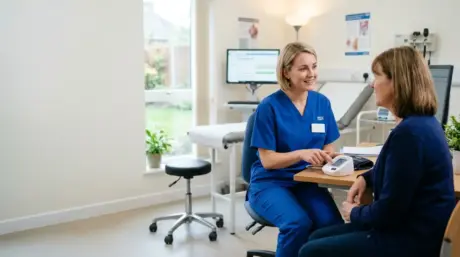
For example, during a blood pressure appointment, an HCA might explain the procedure, record the reading and pass concerns to the supervising clinician according to practice procedures.

This combination of patient contact and practical responsibilities makes teamwork essential.
Patients may be worried, uncomfortable or unfamiliar with medical procedures. A calm explanation and respectful approach can make their experience easier.
Although HCAs support routine patient care, their responsibilities differ from practice nurse duties, which can include clinical assessment, care planning and other responsibilities requiring professional nursing registration.
What Qualifications Do You Need to Become a GP Healthcare Assistant?
There is no single nationally prescribed qualification required for every healthcare assistant position. However, individual employers can set their own recruitment criteria.
Education and Relevant Experience
Some GP practices may prefer applicants who have:
- GCSEs in English and maths, or equivalent qualifications.
- Previous healthcare, care or support-work experience.
- Knowledge of patient confidentiality and infection prevention.
- Good communication and basic computer skills.
- Relevant health and social care training.
Previous experience is helpful, but it is not always essential.
The National Careers Service identifies healthcare assistant entry routes through college study, apprenticeships and work-based learning.
Experience in customer service, volunteering or supporting vulnerable people may also demonstrate transferable skills. However, it should never be presented as equivalent to clinical training.
Employer Checks and Suitability
GP practices may conduct background checks appropriate to the position, including an enhanced Disclosure and Barring Service (DBS) check in England and Wales where the role is eligible.
Employers may also verify references, employment history and suitability for patient-facing responsibilities.
Because requirements differ, the vacancy description is the most reliable starting point.
How to Become a Healthcare Assistant in a GP Surgery
If you are considering this career, a practical approach is to identify suitable positions and prepare for their actual requirements.
1. Find Suitable Vacancies
Search NHS Jobs, local GP practice websites and primary care recruitment services.
Look for titles such as Healthcare Assistant, GP Healthcare Assistant, Primary Care HCA or Trainee Healthcare Assistant.
Read each advertisement carefully. Check whether the practice expects previous experience in blood-taking, health checks or other clinical activities.
2. Prepare Your Application
Focus on evidence of the qualities the employer needs.
For example, customer service experience might demonstrate communication skills, while previous care work could show your ability to support people respectfully.
Use genuine examples of teamwork, reliability and maintaining confidentiality.
If you have not performed a particular clinical task, explain your willingness to undertake appropriate training rather than claiming competence you do not possess.
3. Check Workplace Training and Supervision
Before accepting a position, establish what support the practice provides.
Useful questions include:
- Will I receive a structured induction?
- Which clinical skills are required before starting?
- Is training provided for blood-taking or ECG recording?
- Who will assess my competence?
- Which registered professional will provide clinical support?
- What should I do when a patient needs further assessment?
These questions help you assess whether the position matches your current skills and provides suitable support.

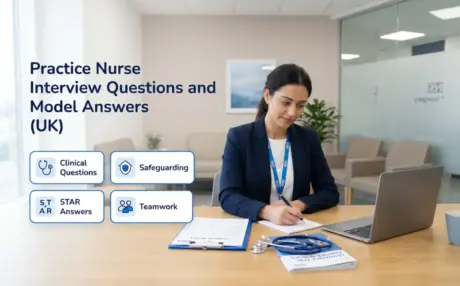
For applicants considering a future move into registered nursing, preparing for practice nurse interview questions can also provide insight into the professional responsibilities and clinical knowledge expected in more advanced roles. These interviews are different from those for GP healthcare assistant positions.
What Skills and Training Does a GP Healthcare Assistant Need?
Successful healthcare assistants combine practical skills with professionalism and compassion.
Important Personal and Workplace Skills
Communication: Explaining routine procedures clearly and listening carefully to patients.
Empathy: Treating people respectfully, including those who feel anxious or vulnerable.
Attention to detail: Recording observations accurately and following agreed procedures.
Organisation: Managing appointments, equipment and routine responsibilities efficiently.
Teamwork: Communicating with colleagues and recognising when a registered professional needs to intervene.
Safeguarding, confidentiality and infection prevention are equally important. GP healthcare assistants must also follow established policies and procedures in health and social care to protect patients, maintain professional standards and respond appropriately to workplace concerns.
Induction and the Care Certificate
New healthcare assistants may receive workplace induction covering safe care, communication, infection prevention and other essential responsibilities.
The 2025 Care Certificate standards contain 16 standards, including awareness of learning disability and autism.
The Care Certificate provides an induction framework. It is not a substitute for a regulated professional qualification or task-specific clinical competence assessment.
Learning the theory behind a procedure does not automatically mean an HCA is authorised to perform it.
What Clinical Tasks Can a GP Healthcare Assistant Perform?
Clinical responsibilities are determined by the task, individual competence, appropriate delegation and workplace arrangements.
The CQC guidance on healthcare assistants in general practice explains how practices in England should manage training, clinical responsibilities and supervision.
Taking Blood, ECGs and Other Delegated Tasks
A suitably trained HCA may undertake venepuncture (taking blood samples), record ECGs or perform specified patient observations.
Before carrying out these activities, the worker must have appropriate training, demonstrated competence and clear instructions.
An HCA should also know when to report an unexpected reading or seek clinical advice.
Vaccinations and Clinical Restrictions
Some vaccinations may be administered by appropriately trained HCAs under specific conditions.
For example, the CQC explains that certain vaccinations can be administered using a valid Patient Specific Direction (PSD), which is an instruction from an authorised prescriber for an individual patient.
HCAs cannot administer vaccines under a Patient Group Direction (PGD).
The CQC also advises that cervical screening sample-taking is not appropriate for HCAs because it involves clinical judgement beyond the role.
The key principle: Being trained for one procedure does not provide permission to perform every clinical task. An HCA must work within their competence and the practice’s approved arrangements.

GP Healthcare Assistant vs General Practice Assistant vs Practice Nurse
These roles work within primary care but have different responsibilities.
| Role | Main responsibilities |
|---|---|
| GP Healthcare Assistant (HCA) | Patient observations, routine checks and delegated support tasks |
| General Practice Assistant (GPA) | Administrative support combined with some basic clinical activities |
| Practice Nurse | Registered nursing care, clinical assessment and responsibilities within professional competence |
A General Practice Assistant is not another name for a GP healthcare assistant. NHS England describes the GPA role as combining administrative responsibilities with some clinical support.
A registered practice nurse must meet Nursing and Midwifery Council (NMC) requirements. The NMC provides a register of approved nursing programmes that lead towards professional registration.
Registered nurses must also maintain their professional registration through revalidation, which includes meeting NMC revalidation CPD requirements. These requirements apply to registered nurses, not healthcare assistants solely because they work in an HCA role.
If your longer-term goal is nursing, knowing how to become a practice nurse in the UK can help you identify the qualifications, professional registration requirements and training routes involved in progressing towards that career.
GP Healthcare Assistant Salary and Career Progression
The National Careers Service lists general healthcare assistant earnings of approximately £25,000 for starters and £27,000 for experienced workers. These are broad occupational estimates, not confirmed GP-specific salaries.
Actual earnings depend on the employer, working hours, experience and contract. NHS Agenda for Change bands should not automatically be applied to every GP practice position.
For those considering a future move into registered nursing, practice nurse salary in the UK is another useful area to research, as pay and employment arrangements can differ between healthcare assistant and practice nurse roles.
Experience as an HCA may support progression into senior healthcare support or further professional study. For those considering registered nursing, GP practice nurse training involves specific educational pathways and professional requirements. Becoming a registered nurse requires completing an NMC-approved nursing programme and meeting registration requirements.
Further Learning for a Career in Primary Care
Additional study may help healthcare support workers strengthen their understanding of patient care and primary care services.
Thames College offers an online Practice Nurse Level 7 course covering subjects such as NHS operations, patient care, wound management and healthcare law.
The course offers CPD certificate and QLS-endorsed certificate options, subject to its stated completion and ordering arrangements.
It is intended for knowledge development and does not award nursing registration, replace supervised clinical training or automatically qualify someone for an HCA position.
Final Thoughts
A GP healthcare assistant role can offer valuable experience in primary care. The best starting point is to compare real vacancies, identify the skills employers expect and check the training and supervision available.
Choose a position that matches your current abilities and offers appropriate support for developing new ones.
FAQs
Yes, some employers consider applicants without previous healthcare employment and provide workplace training. However, other GP practices may require care experience or specific clinical skills. Always check the individual vacancy.
Employers should incorporate relevant Care Certificate standards into induction arrangements. Completing the standards involves demonstrating both knowledge and practical competence. The certificate is not a professional licence or a replacement for procedure-specific training.
Yes, when appropriately trained, assessed as competent and authorised within the practice’s arrangements. Blood-taking is not automatically permitted simply because someone holds an HCA job title.
Certain vaccinations may be administered by appropriately trained HCAs under a valid Patient Specific Direction. This does not authorise all injections or vaccinations. Patient Group Directions cannot be used by HCAs.
Some NHS healthcare support roles use Agenda for Change pay bands, but GP practices may have different employment arrangements. Check the advertised salary and contract rather than assuming a particular band.
Yes, an HCA may pursue nursing as a longer-term career goal. However, experience alone is insufficient. Becoming a registered nurse requires completing an NMC-approved nursing education route and meeting registration requirements.
Still searching for the right course? View All Courses NOW

- All courses
- QLS Endorsed Single Course683
- Management Courses330
- Technology Courses322
- Mega Bundles270
- Business Courses237
- Health Courses215
- Teaching Courses201
- Professional & Personal Growth201
- Creative Courses95
- Law Courses85
- Marketing Courses77
- Counselling Courses71
- Engineering Courses53
- Job Guarantee Programme50
- Arts Courses37
- 4-in-1 bundle32
- QLS Endorsed Single Course with Free Certificate27
- Science Courses26
- Agriculture Courses22
- Regulated Courses7
- Psychology3