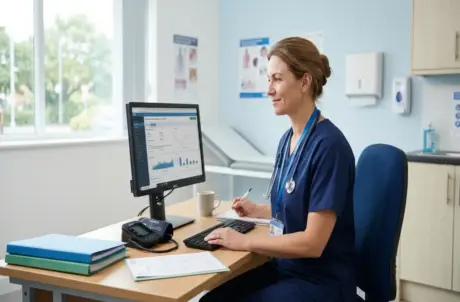


Choosing the right training is an important step towards a career in general practice nursing. Whether you’re a newly qualified nurse, an experienced healthcare professional or considering a move into primary care, knowing which course suits your needs can make the decision easier.
GP practice nurse training offers several routes, including employer-supported programmes, university modules, supervised clinical development and flexible online courses. The most suitable option depends on your existing qualifications, experience and career goals.
This guide compares the main training options in the UK, explains what you can expect to study and helps you choose a course that supports your professional development.
For a broader overview of qualifications and career entry, see our guide to becoming a practice nurse in the UK.
If you’re considering this career for the first time, it’s also worth looking at the wider process of becoming a practice nurse in the UK.
Table of Contents
What Training Do You Need to Become a GP Practice Nurse?
To work as a registered practice nurse in the UK, you need appropriate Nursing and Midwifery Council (NMC) registration and the clinical competence required for your responsibilities.
The NMC requirements for becoming a nurse explain the approved education and registration pathway.
If you’re already a registered nurse, you may be able to move into general practice through an employer-supported training programme or relevant professional development.
A postgraduate qualification is not universally required for entry. Employers assess applicants based on their registration, relevant experience, clinical skills and ability to meet the position’s requirements.
Can Healthcare Assistants Train to Become Practice Nurses?
Healthcare assistants can build useful experience in GP surgeries before progressing towards nursing education.
If you’re considering a healthcare support role first, our guide to starting a career in nursing assistance explains the responsibilities and skills involved.
Working as a GP healthcare assistant can introduce you to patient care, clinical environments and multidisciplinary teamwork.
Our guide to working as a GP healthcare assistant explains the responsibilities and opportunities available in this support role.
To progress into registered nursing, you would need to complete an appropriate approved nursing education pathway and obtain NMC registration.
The Main GP Practice Nurse Training Routes in the UK
There are several ways to develop the knowledge and skills needed for general practice nursing. Each offers different benefits depending on your current position.

1. Employer-Supported GP Nursing Training
Employer-supported training is particularly relevant to registered nurses moving from hospital or community settings into general practice.
Some GP surgeries and Primary Care Networks (PCNs) provide structured induction and professional development opportunities.
Training may include:
- Supervised clinical practice and mentoring.
- Immunisation and vaccination training.
- Wound care and patient assessment.
- Long-term condition management.
- Competency assessments and reflective learning.
Some regions also offer General Practice Nurse Vocational Training Schemes (GPN VTS), combining employment with organised learning.
These programmes can be a practical choice for nurses who want to develop their skills while gaining experience in a GP setting.
2. University and Postgraduate Nursing Modules
Universities provide general practice nursing modules for eligible learners interested in academic development.
Depending on the programme, options may include Level 6 study, Level 7 postgraduate modules and introductory learning without academic credits.
These courses may cover primary care nursing, clinical decision-making, healthcare leadership and professional practice.
Before enrolling, compare the entry requirements, academic credits, assessment methods and learning outcomes.
3. Foundation Programmes and Supervised Clinical Development
Foundation programmes support registered nurses who are new to general practice.
They commonly combine structured teaching with supervised workplace experience, helping learners develop confidence in primary care responsibilities.
Training may cover patient assessment, long-term condition management, professional accountability and clinical documentation.
Some programmes also provide mentorship and competency-based assessments.
Availability and eligibility differ between regions, so checking local NHS training hubs is a useful starting point.
4. Supplementary Online Learning
Online courses offer a flexible way to develop healthcare knowledge while managing work, family and other commitments. They can be particularly useful for healthcare professionals who want to strengthen their understanding of general practice nursing.
Depending on the course, you may study nursing fundamentals, NHS services, patient care, health promotion, healthcare regulations and clinical management.
However, different training routes serve different purposes:
- Employer-supported training: Suitable for registered nurses moving into general practice who want to gain practical experience through supervised workplace learning.
- University modules: Designed for eligible nurses seeking formal academic study, professional development or additional qualifications.
- Foundation programmes: Help registered nurses who are new to primary care build clinical skills through structured training and supervision.
- Online courses: Suitable for healthcare learners and professionals who want to develop theoretical knowledge through flexible, self-paced study.
Which option should you choose?
If you’re already a registered nurse and want practical GP experience, employer-supported training or a foundation programme may be suitable. If you’re looking for academic development, university modules may better match your goals.
For those interested in building additional healthcare knowledge around existing commitments, online courses provide a convenient learning option.
Ultimately, the right GP practice nurse training route depends on your current qualifications, professional experience and what you want to achieve next.

GP Practice Nurse Training Route Finder
Four questions. Practical UK training pathways. No sign-up.
Which GP nursing training route should you investigate?
Choose your current position, learning goal, UK nation and preferred outcome. Get a tailored overview of suitable routes to research, plus official guidance links.
What does the tool check?
Your NMC registration position comes first. The tool then suggests routes such as approved nurse education, supervised GP practice training, university study or supplementary online learning. It does not establish course eligibility, approve competencies or award qualifications.
What is your current professional position?
What Clinical Skills Are Covered in GP Practice Nurse Training?
General practice nursing involves caring for patients with varied health needs. Training therefore covers a range of clinical and professional skills.
Common learning areas include:
- Immunisation and vaccination: Understanding vaccination procedures, patient safety and appropriate clinical practice.
- Wound management: Developing knowledge of wound assessment, dressing principles and care planning.
- Long-term condition management: Supporting patients with diabetes, asthma, hypertension and other ongoing conditions.
- Health promotion: Providing patient education and supporting preventative healthcare.
- Clinical assessment: Recording observations, recognising patient needs and maintaining accurate documentation.
These skills support the day-to-day responsibilities of a practice nurse, although specific duties vary between GP surgeries.

These skills relate to the day-to-day responsibilities of a practice nurse, although specific duties depend on the employer and the nurse’s competence.
Why Supervision and Competency Assessment Matter
Practical clinical development is an important part of nursing training.
Supervised learning allows nurses to build experience, receive professional feedback and demonstrate competence in particular procedures.
When comparing training programmes, check whether clinical supervision, practical assessments and workplace support are included.
GP Practice Nurse Training Programmes Across the UK
Training opportunities vary across the four UK nations, reflecting different workforce development arrangements.
England: GP practices, PCNs, NHS training hubs and universities may provide employer-supported training, foundation programmes and professional development modules.
Scotland: NHS Education for Scotland’s GPN Education Pathway supports registered nurses working in general practice through structured work-based and facilitated learning.
Wales: Healthcare Education and Improvement Wales supports professional development opportunities, including foundation learning for nurses entering general practice.
Northern Ireland: Opportunities may involve GP Federations, local healthcare organisations and university-based education.
Programme availability, funding and eligibility vary. Checking local arrangements will help you identify suitable opportunities.
Can You Complete GP Practice Nurse Training Online?
Yes. Online learning can be a convenient way to develop theoretical knowledge and complement practical professional development.
For healthcare workers balancing shifts, family commitments and study, flexible courses can make learning more manageable.

What Online Courses Can Help You Study?
If you’re interested in developing your understanding of practice nursing, Thames College offers a Practice Nurse Level 7 course.
The course covers topics including:
- Fundamentals of practice nursing and NHS services.
- Health and wellness promotion.
- General healthcare and patient care principles.
- Emergency first aid and wound management.
- Medical information collection and clinical safety.
- Healthcare law, regulation and nurse management.
The course is delivered online, with self-paced learning materials that can be accessed around your existing commitments.
It is advertised as CPD-accredited and endorsed by the Quality Licence Scheme (QLS). After completing the assessment, learners can apply for the relevant certificates described on the course page.
The course supports healthcare knowledge development. Professional nurse registration and clinical practice requirements follow the appropriate regulated pathways.
For nurses, healthcare staff and learners considering supplementary professional development, the course offers a flexible way to strengthen their understanding of practice nursing topics.
Continuing Professional Development and NMC Revalidation
Professional development remains important throughout a nursing career.
Under the NMC continuing professional development requirements, registered nurses must complete 35 hours of relevant CPD during each three-year revalidation period, including at least 20 hours of participatory learning.
Nurses should choose activities relevant to their scope of practice and maintain appropriate evidence of their learning.
Knowing the CPD hours required for NMC revalidation can help registered nurses plan and record their professional development.
Understanding the CPD hours required for NMC revalidation can help you plan professional development alongside your existing responsibilities.
How to Choose the Right GP Practice Nurse Training Route
Before enrolling, compare your options against your professional experience, learning needs and intended career direction.

Check Your Qualifications and Experience
Ask yourself:
- Are you already registered? Your current NMC registration status will help determine the appropriate pathway.
- What experience do you have? Nurses new to general practice may benefit from supervised workplace development.
- What do you want to achieve? Consider whether you need clinical competencies, academic credits or additional knowledge.
- What recognition does the course offer? Check the qualification, accreditation and learning outcomes.
- How much flexibility do you need? Choose a study format that fits your existing commitments.
For education leading to professional registration, the NMC list of approved nursing programmes can help you check approved options.
Compare Course Content, Support and Outcomes
A useful course comparison goes beyond the title.
Review the curriculum, delivery method, assessments, learner support and any practical training arrangements.
If you’re considering online study, check whether the course covers subjects relevant to your current development needs. For employer-supported programmes, consider the supervision and clinical learning opportunities provided.
The best choice is one that matches both your professional starting point and what you want to achieve.
Your Next Steps Towards General Practice Nursing
Once you understand the available training routes, you can start planning your development.
Review your existing qualifications, identify skills you want to strengthen and compare suitable courses or workplace training opportunities.
Once you’re ready to apply, preparing for a practice nurse interview can help you present your experience and professional knowledge confidently.
If you’re applying for a GP nursing position, preparing for a practice nurse interview can help you present your experience, professional knowledge and learning goals confidently.
You may also want to review practice nurse pay and career progression when comparing opportunities across different employers.
It’s also useful to consider practice nurse pay and career progression when comparing opportunities across different GP employers.
Whatever your starting point, choosing relevant training can help you approach your next professional development step with greater clarity.
Make Your Next Training Decision With Confidence
GP practice nurse training offers several opportunities to develop your knowledge and professional capabilities. The right route depends on your qualifications, existing experience and the type of learning you need.
Whether you’re moving into general practice or looking to strengthen your healthcare knowledge, comparing training options carefully will help you make an informed decision.
For flexible study covering practice nursing, NHS services, patient care and healthcare regulation, consider Thames College’s Practice Nurse Level 7 course as part of your professional learning plans.
Frequently Asked Questions About GP Practice Nurse Training
Yes. Newly registered nurses may apply for suitable general practice nursing roles. Some employers offer induction, supervision and structured development to support their transition into primary care.
The duration depends on the programme. Employer-supported schemes, university modules and supplementary online courses have different learning structures and completion requirements.
A Level 7 qualification is not universally required. Appropriate NMC registration, relevant clinical competence and employer-specific requirements are central considerations.
Some training programmes offer funded places for eligible learners. Others involve tuition or course fees. Funding conditions depend on the provider, employer and location.
Yes. Flexible online courses can support learning around professional and personal commitments. Where clinical competencies are required, practical training and appropriate supervision remain important.
Some nursing training programmes receive NHS funding or employer support. Eligible nursing students in England may also receive financial support through the NHS Learning Support Fund. Funding depends on the programme, location and individual eligibility, so check the arrangements before applying.
You can pursue a registered nurse degree apprenticeship, which combines paid employment with university study and practical training. This provides an alternative to traditional full-time university study, but an approved nursing education programme and NMC registration are still required.