
Sometimes, feelings are easier to express through an image than through words. A drawing, painting or piece of sculpture can offer another way to explore experiences that are difficult to explain.
Art therapy combines creative expression with professional psychological support. It gives people opportunities to communicate feelings, reflect on experiences and work towards therapeutic goals.
The benefits of art therapy may include better emotional expression, greater self-awareness and improved mental wellbeing. Research also suggests that it can help reduce certain mental health symptoms, although the evidence varies considerably.
Here’s what the research tells us about art therapy’s potential benefits, where questions remain and why professional support matters.
Quick Answer: What Are the Benefits of Art Therapy?
Art therapy may support emotional expression, self-awareness and mental wellbeing. Research suggests it can help reduce depressive symptoms in some groups, although findings for anxiety and other outcomes are less consistent. Its effectiveness depends on the individual, therapeutic context and quality of the supporting evidence.
Table of Contents
Art Therapy Certification Diploma
Study creativity, psychology and wellbeing at your own pace.
What Is Art Therapy and How Does It Work?.
Art therapy is a form of psychotherapy that uses creative expression as part of a professional therapeutic relationship.
According to the British Association of Art Therapists’ definition of art therapy, art-making provides a way to communicate thoughts, feelings and experiences alongside talking with a trained art therapist.
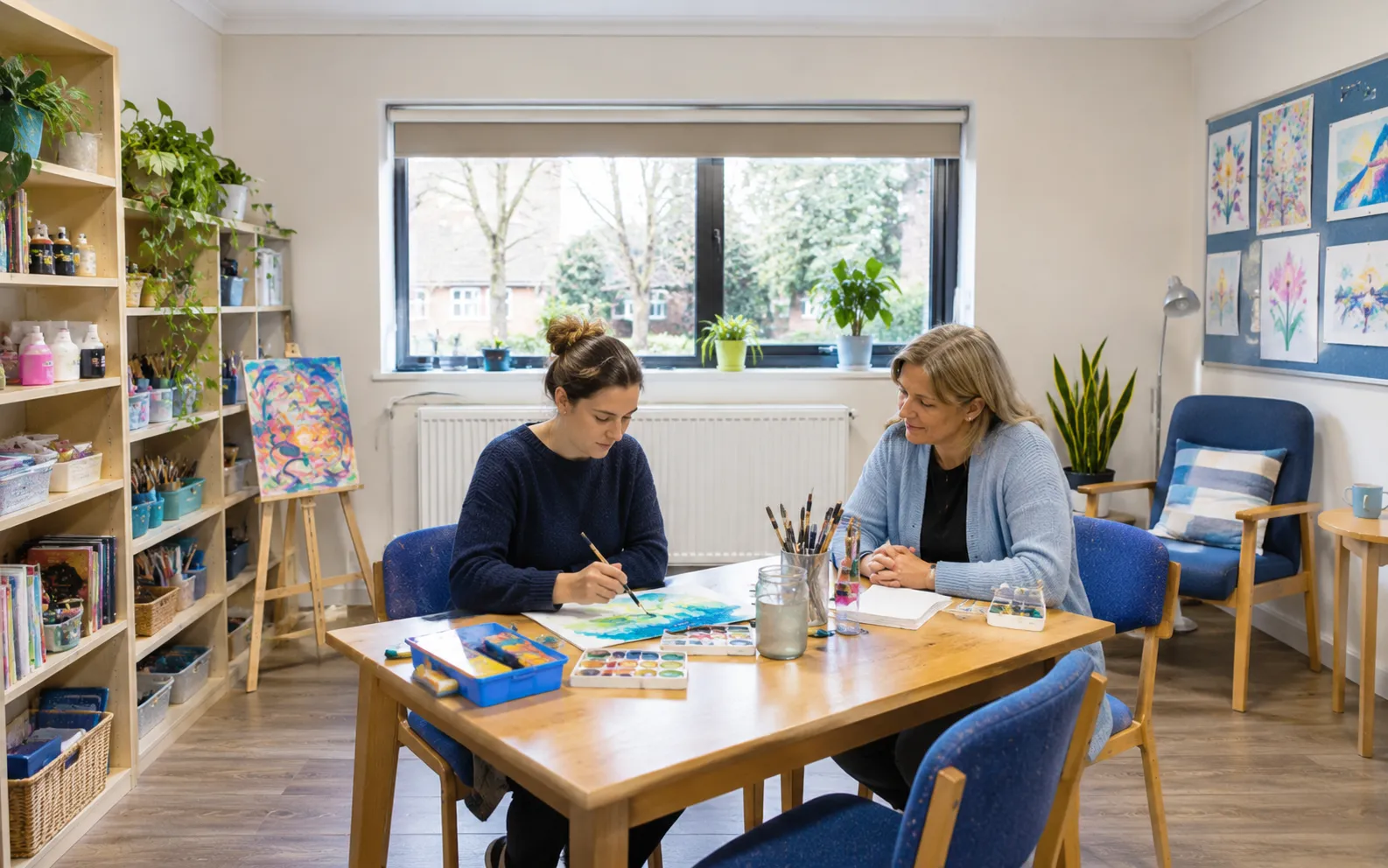
Sessions may involve drawing, painting, sculpture or other creative materials. The therapist supports the person in exploring their experiences without judging their artistic ability.
The artwork does not need to look attractive or have an obvious meaning. What matters is how the individual experiences the creative process.
There is an important difference between professional art therapy and making art independently. Creative hobbies may support personal wellbeing, but clinical art therapy involves therapeutic goals, professional boundaries and a trained practitioner.
What Are the Main Benefits of Art Therapy?
The psychological benefits of art therapy go beyond producing artwork. Depending on someone’s needs and circumstances, the creative process may provide opportunities for emotional expression, reflection and coping.
However, not every potential benefit has the same level of scientific support.
1. Helps People Express Difficult Emotions
Not everyone finds it easy to discuss grief, anxiety or other difficult experiences.
Art therapy provides another way to communicate feelings that may be uncomfortable or difficult to explain verbally.
For example, an adult attending a community mental health service might use images to represent feelings surrounding a significant loss. Rather than asking them to explain everything immediately, the therapist could use the artwork as a starting point for conversation.
This is an illustrative example, not a documented patient case.
Importantly, art therapists do not simply interpret particular colours or shapes as proof of specific emotions. The meaning comes from the person’s own experiences and reflections.

For people who struggle with verbal expression, this can be one of the most meaningful emotional benefits of art therapy.
2. May Support Emotional Regulation and Stress Management
Stress can make it difficult to concentrate, think clearly or respond calmly to challenging situations.
During art therapy, working with creative materials may offer an opportunity to focus attention and become more aware of feelings.
Some people find the experience calming. Others discover that making artwork brings difficult emotions to the surface.
A therapist can help the person make sense of either experience.
For example, someone dealing with workplace stress might create an image representing their current pressures. Discussing the image could help them identify feelings they had previously struggled to describe.
Feeling calmer after making art does not necessarily mean a clinical anxiety condition has improved. Relaxation and measurable psychological improvement are different outcomes.
Readers interested in studying creative approaches to emotional support can explore Thames College’s Art Therapy for Emotional Wellbeing: Techniques to Support Healing.
3. Encourages Self-Awareness and Personal Reflection
Art therapy can create opportunities to consider feelings and experiences from a different perspective.
A person might notice recurring themes in their artwork or recognise how their emotional responses change over time.
The therapist can help them explore these observations without imposing a fixed interpretation.
For example, someone experiencing a difficult life transition might create images representing their past, present and hopes for the future. Reflecting on these images could help them discuss concerns or priorities.
This does not guarantee greater self-awareness, but it offers another method of personal exploration.
Some people also find it helpful to combine images with written reflections. Thames College’s Art & Journal Therapy Course UK introduces approaches that connect creative expression with journalling and self-reflection.
4. May Help Reduce Symptoms of Depression
Depression can affect motivation, emotional engagement and the ability to communicate personal experiences.
Art therapy may offer a different way to participate in psychological support, particularly when discussing feelings directly is difficult.
Research involving adults with depression has reported improvements in depressive symptoms following some art therapy interventions.
This is an encouraging finding, but it does not establish that art therapy will work for everyone.
It also does not mean that drawing or painting independently provides the same effects as professionally delivered treatment.
Art therapy may be considered alongside other appropriate forms of support, depending on individual circumstances and professional assessment.
The research section below explains what clinical studies have found and why their limitations matter.
5. May Help With Anxiety and Psychological Distress
Art therapy may help some people explore worries, uncertainty and emotional distress within a supported environment.
For example, someone experiencing anxiety might find that creating artwork gives them a manageable starting point for discussing concerns with a therapist.
The process may also help individuals reflect on how they respond to difficult situations.
However, temporary relaxation should not be confused with a lasting reduction in clinically measured anxiety symptoms.
Scientific findings have varied. Some reviews report improvements in anxiety, while others find weaker or statistically uncertain effects.
For this reason, art therapy for anxiety and depression is best understood as a potentially helpful therapeutic approach rather than a guaranteed treatment.
6. May Support Confidence and Social Connection
Creating artwork can provide opportunities for participation, choice and personal expression.
In professionally facilitated group art therapy, participants might work individually before choosing whether to discuss their experiences with others.
Someone who finds group conversations difficult may feel more comfortable participating through creative work.
For example, an adult attending a group session might share an image instead of immediately explaining a personal experience in words.
Such opportunities may support confidence and connection, although the benefits depend on individual preferences and how the group is facilitated.

Group work will not suit everyone, and improvements in social functioning should not be assumed without appropriate evidence.
What Does Scientific Research Say About Art Therapy?
Scientific interest in art therapy has increased, but evaluating its effectiveness is not straightforward.
Studies involve different participants, therapeutic approaches, session lengths and outcome measures. Some examine people with diagnosed mental health conditions, while others consider wider wellbeing outcomes.
Researchers therefore need to establish both whether improvements occur and how confidently those improvements can be attributed to art therapy.

Evidence for Mental Health and Psychological Wellbeing
A 2024 systematic review published in JAMA Network Open examined active visual art therapy across different patient groups.
Its meta-analyses included 50 studies, 217 measured outcomes and 2,766 participants.
The researchers reported that:
- 18% of measured outcomes favoured art therapy.
- 1% favoured control conditions.
- 81% did not show improvement compared with controls.
These figures need careful interpretation.
The finding that 81% of measured outcomes showed no improvement does not mean art therapy failed for 81% of participants.
The percentages refer to different research outcomes measured across the studies, not individual treatment success rates.
The review also identified considerable variation between studies and generally low research quality. Its findings suggest potential therapeutic value, but they do not support claims of universal effectiveness.
A more recent 2026 systematic review of art therapy and mental health outcomes examined 29 studies involving 2,077 participants.
It reported favourable findings for psychological wellbeing, depression, anxiety and cognitive function. The result for loneliness was not statistically significant.
These findings are encouraging. However, differences between the studies mean their conclusions should not be applied equally to every person or condition.
What Studies Show About Depression and Anxiety
A 2026 systematic review of art therapy for adults with depression included 14 studies involving 861 participants.
It found a statistically significant reduction in depressive symptoms compared with control conditions.
However, the effect on anxiety symptoms was small and not statistically significant. Only three studies contributed to the anxiety analysis.
Other reviews have reported favourable anxiety outcomes, so the findings are not entirely consistent.
This difference does not necessarily mean that one review is correct and another is wrong.
Studies may involve different participant groups, intervention methods, comparison conditions and outcome measures.
The safest interpretation is that art therapy shows promise for some mental health outcomes, particularly depressive symptoms, while further high-quality research is needed.
Why the Evidence Has Limitations
A positive research finding does not automatically establish that a therapy works reliably for everyone.
Some studies have relatively small samples, different intervention methods or limited follow-up periods.
These differences make it difficult to determine which approaches are most effective and whether benefits continue over time.
| Professional art therapy | Everyday creative activities |
|---|---|
|
✓
Delivered by a qualified,
registered art therapist
|
✓
Can be facilitated by
parents or teachers
|
|
✓
Involves a therapeutic
relationship and individual goals
|
✓
Focuses on creativity,
enjoyment or general wellbeing
|
|
✓
May form part of mental
health support
|
✓
Is not automatically
psychological treatment
|
Overall, art therapy may be a useful addition to appropriate mental health care. The evidence does not establish that it should replace other recommended treatments.
Who May Benefit Most From Art Therapy?
Art therapy can be relevant to people of different ages, backgrounds and communication preferences.
However, there is no single group for whom it is guaranteed to be effective.
Adults Experiencing Emotional or Mental Health Difficulties
The benefits of art therapy for adults may be particularly relevant when emotional experiences are difficult to discuss.
Consider someone coping with a stressful life transition, such as bereavement, illness or changes in family circumstances.
They may find it easier to represent their experiences visually before discussing them with a therapist.
The artwork provides something concrete to reflect on without requiring an immediate verbal explanation.
Adults experiencing depression, anxiety or other psychological difficulties may also encounter art therapy as part of broader support arrangements.
For learners interested in the relationship between creativity and psychological processes, Thames College’s Art Therapy: Art Therapy & Psychology introduces relevant concepts.
Children, Older Adults and People Who Find Talking Difficult
Art therapy may also be considered for children, older adults and people who prefer alternative ways to communicate.
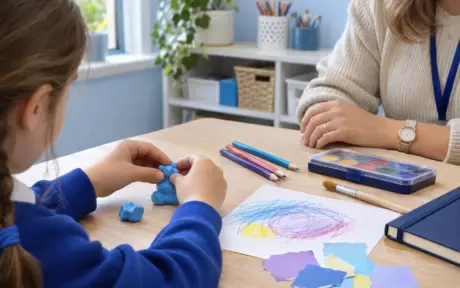
In a UK school or children’s mental health service, for example, an art therapist might use age-appropriate creative materials to help a young person explore difficult experiences.
Similarly, an older adult may find visual expression meaningful when reflecting on memories or significant life changes.
These examples illustrate how the approach might be adapted; they do not establish a specific clinical outcome.
Individual needs, communication preferences and health circumstances should guide therapeutic decisions.
Age alone does not determine suitability, and research findings from one population should not automatically be applied to another.
Is Art Therapy Suitable for Everyone?
Art therapy can be helpful, but it will not suit everyone.
Some people enjoy creative expression. Others may feel uncomfortable making artwork, discussing personal experiences or working in a group.
Creative work can also bring difficult feelings or memories into awareness.
This does not automatically mean art therapy is unsuitable, but it highlights the importance of professional support and appropriate therapeutic boundaries.
A trained art therapist can consider a person’s circumstances, preferences and goals when planning sessions.
It is also worth remembering that art therapy is not a replacement for every other form of mental health treatment.
Someone receiving treatment for depression, anxiety or another mental health condition should discuss appropriate care options with a qualified healthcare professional.
Independent drawing, painting or creative journalling may be enjoyable ways to reflect and relax. However, the benefits of those activities should not automatically be equated with outcomes from professionally delivered art psychotherapy.
Art Therapy in the UK: Professional Practice and Further Learning
In the UK, art therapist and art psychotherapist are legally protected professional titles.
The Health and Care Professions Council’s guidance on protected professional titles confirms that individuals must be registered with the HCPC to use these titles.
If you are considering working with an art therapist, you can check their registration through the HCPC’s public register.
Learning about art therapy is different from qualifying to practise professionally.
An introductory online course can help learners become familiar with creative wellbeing approaches, psychological concepts and reflective techniques.
For example, Thames College’s Art Therapy Certification Diploma introduces art therapy principles, psychology, mindfulness and creative expression through flexible online study.
However, completing this course does not independently qualify someone for HCPC registration or authorise them to practise as a registered art therapist.
Anyone pursuing that profession must meet the relevant HCPC education and registration requirements.
The benefits of art therapy extend beyond making something creative. It may provide opportunities for emotional expression, self-reflection and psychological support.
Research offers encouraging findings for some outcomes, particularly depressive symptoms, but important questions remain. Understanding both the possibilities and limitations helps people make informed decisions.
Art Therapy Certification Diploma
Study creativity, psychology and wellbeing at your own pace.
Interested in Learning More About Art Therapy?
If you’re curious about the relationship between creativity, psychology and emotional wellbeing, Thames College’s Art Therapy Certification Diploma provides an opportunity to study relevant principles and creative techniques at your own pace.
Explore the course curriculum and see what you’ll study next.
Frequently Asked Questions
No, you do not need artistic experience or drawing skills to benefit from art therapy. The focus is on expressing thoughts and feelings rather than producing impressive artwork.
A trained art therapist can help you work with materials that feel comfortable, whether that involves painting, drawing or collage.
In the UK, professional art therapy is designed around therapeutic needs, not artistic performance or technical ability.
Art therapy and independent art-making serve different purposes, so neither can be considered universally more effective.
Creative hobbies may offer enjoyment, relaxation and opportunities for reflection.
Professional art therapy, however, involves a trained therapist who supports emotional exploration within a structured therapeutic relationship.
If you want to address a particular mental health difficulty, discussing suitable support options with an appropriate healthcare professional is more useful than assuming self-directed activities will achieve the same results.
Art therapy may help some people experiencing anxiety or depression, although the strength of evidence differs between conditions.
Research has reported improvements in depressive symptoms in certain adult populations, while anxiety findings have been less consistent.
In the UK, art therapy may form part of wider psychological or mental health support, depending on individual needs and service availability.
It should not be treated as a guaranteed solution or a replacement for recommended treatment.
An art class generally teaches creative skills, such as drawing, painting or working with particular materials.
Art therapy uses creative expression within a professional psychotherapeutic relationship to explore emotions and personal experiences.
In the UK, art therapists must be registered with the Health and Care Professions Council (HCPC).
Although both activities may be enjoyable, attending an art class does not provide the same professional therapeutic support as working with a registered art therapist.
Art therapy may be suitable for children, adults and older people who find creative expression helpful when exploring emotions or difficult experiences.
It can be particularly relevant when someone struggles to describe feelings verbally, although this does not mean it will suit everyone.
A registered art therapist considers personal circumstances, communication preferences and therapeutic goals before deciding how to approach sessions. Suitability depends on individual needs rather than age or artistic ability alone.