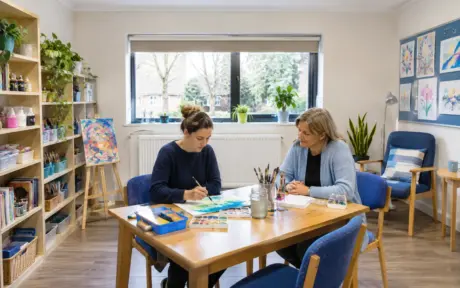

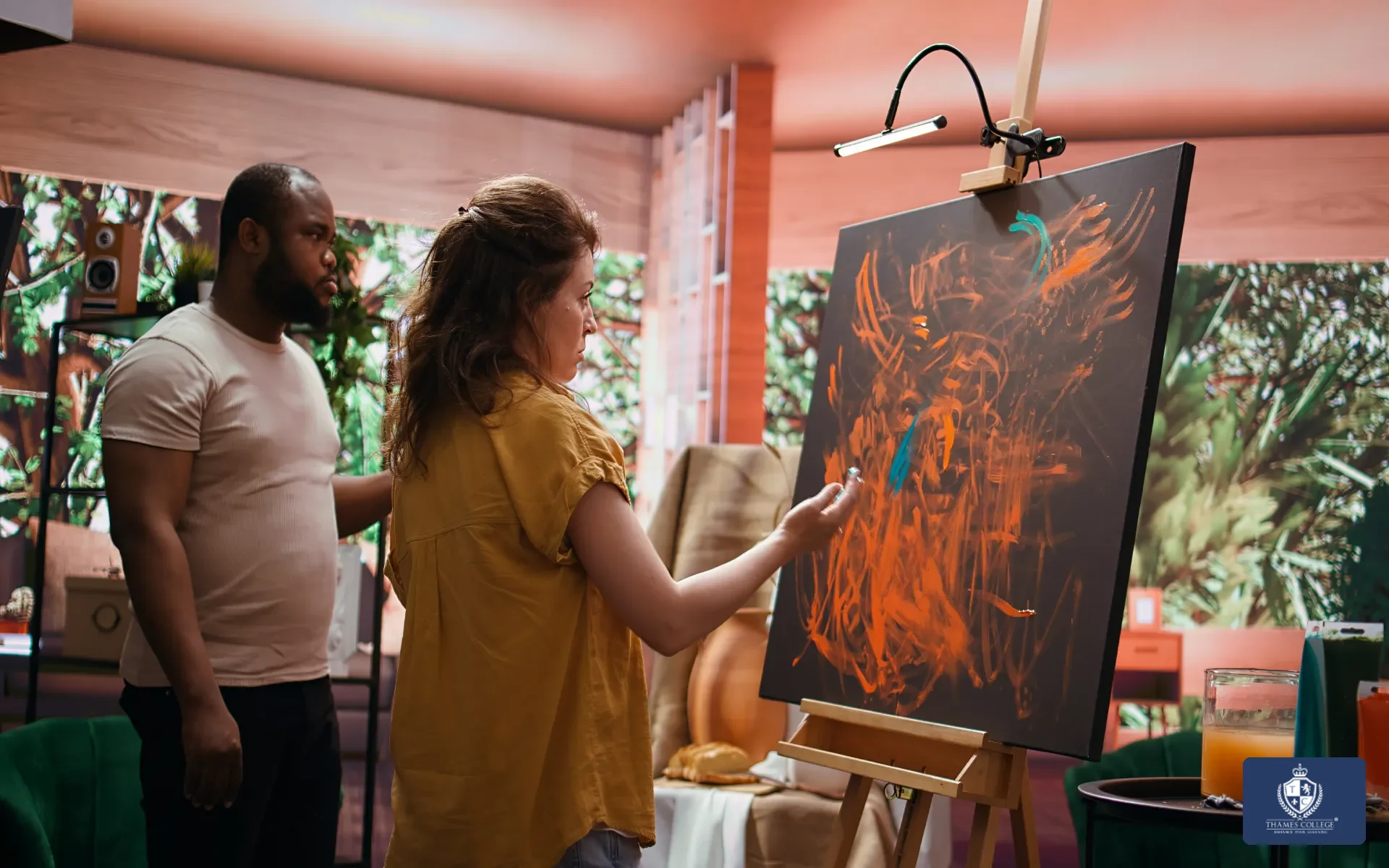
A familiar photograph, a few colours or a simple painting can create meaningful moments for someone living with dementia. Even when words become difficult to find, creative expression may offer another way to communicate.
Art therapy for dementia uses art-making within professional psychotherapy to support emotional expression and communication. Separately, creative activities such as painting, collage and reminiscence artwork can encourage enjoyment, social connection and meaningful engagement.
For care workers, activity coordinators and family carers, the key is choosing activities that reflect each person’s interests, abilities and preferences. Here are six practical approaches and ways to adapt them respectfully.
Table of Contents
What Is Art Therapy for Dementia?
Art therapy is a form of psychotherapy that uses creative expression within a therapeutic relationship. According to the British Association of Art Therapists (BAAT), it is delivered by trained art therapists and does not require artistic ability.
Professional art therapy for dementia and everyday creative activities may involve similar materials, but they serve different purposes.
Our guide explaining what art therapy is provides further information about the therapeutic process and who it may support.
Adults interested in creative wellbeing approaches can consider Thames College’s Art Therapy Certification Diploma, which covers art therapy principles, creative techniques and illness-related applications.
How Can Art Therapy for Dementia Support Wellbeing?
Creative activities may offer opportunities for emotional expression, enjoyment and meaningful engagement. They can also encourage conversation, social interaction and connections with familiar interests.
The NICE dementia guideline recommends offering wellbeing activities tailored to individual preferences.
However, evidence for clinical art therapy remains limited. A Cochrane review of art therapy for dementia identified two small trials involving 88 randomised participants and found insufficient evidence to establish its effectiveness.
Creative engagement may still be worthwhile, but art therapy should not be presented as a treatment that reverses dementia or prevents cognitive decline.
Our article on the benefits of art therapy examines the wider research and its limitations.
6 Creative Art Activities for Dementia Care Settings
These dementia-friendly activities can be adapted for residential care homes, day centres or home environments. They are examples of creative wellbeing activities, not clinical art therapy treatments.

1. Watercolour and Sponge Painting
Painting provides opportunities to experiment with colour, shape and movement without complicated instructions.
Offer large paper, washable paints, easy-grip brushes or sponges. Residents might paint flowers, familiar landscapes or abstract patterns.
Encourage them to choose their own colours and subjects.
The NHS guidance on activities for dementia includes painting, drawing and other creative activities among ways people can remain engaged.
2. Collage With Familiar Photographs
Collage involves arranging photographs, magazine pictures and coloured paper into a personal composition.
Provide large, recognisable images connected to someone’s interests, such as gardening, travel or pets. Pre-cut materials where needed and offer support with adhesives.
The aim is creative participation, not testing memory. Nobody should feel pressured to identify every person or place correctly.
3. Memory-Inspired Artwork

Familiar experiences can provide inspiration for creative expression.
A resident who previously enjoyed gardening might create a picture of flowers. Someone interested in seaside holidays could paint a coastal scene.
Staff can introduce familiar photographs or objects as gentle prompts.
However, reminiscence should remain optional. If a memory causes discomfort, offer a different subject. Meaningful engagement matters more than accurate recollection.
4. Clay and Tactile Art Activities
Clay and suitable modelling materials offer a different sensory experience from painting or drawing.
Residents might create simple shapes, decorative objects or small models connected to personal interests.
Consider grip strength, mobility and sensory preferences when choosing materials. Provide assistance without taking over.
Use suitable non-toxic materials and follow safety procedures, particularly where someone may put objects in their mouth.
5. Collaborative Group Artwork
A shared painting or collage can encourage conversation and social participation.
For example, residents might contribute to a garden-themed mural, choosing individual flowers, colours or background details.
Some people enjoy working together, while others prefer creating independently alongside the group.
Professional practitioners also use collaborative art therapy techniques in appropriate therapeutic settings. Our dedicated article explains these methods in greater detail.
6. Seasonal and Familiar Crafts
Craft activities can connect with meaningful occasions, hobbies or cultural traditions.
Examples include decorating greeting cards, creating paper flowers or making seasonal decorations.
Choose adult-appropriate projects and offer different levels of complexity. Residents should be able to personalise their work or choose another activity.
Our collection of art therapy activities for adults and children provides further creative ideas that care staff can assess and adapt for individual needs.
How to Plan an Art Activity in a Care Setting
Successful creative engagement begins with understanding the person, not choosing the materials.
Care workers and activity coordinators can follow these practical steps:
- Understand personal interests: Consider hobbies, cultural preferences and previous creative experiences.
- Prepare accessible materials: Arrange appropriate equipment in a comfortable, well-lit environment.
- Offer meaningful choices: Let residents decide whether to participate and what they would like to create.
- Provide appropriate support: Demonstrate techniques when helpful without controlling the artwork.
- Observe individual responses: Notice enjoyment, fatigue, discomfort or signs that someone wants to stop.
- Adapt the activity: Simplify materials, offer a break or change the task according to individual preferences.

For example, a resident who enjoys gardening might paint flowers using a larger brush and a familiar photograph for inspiration.
For CQC-regulated services in England, Regulation 9 on person-centred care requires care to reflect individuals’ needs and preferences.
Care professionals interested in strengthening their understanding of communication, mental capacity and supporting older adults may also consider Thames College’s Health & Social Care course.
How to Adapt Art Activities for Different Dementia Care Needs
Not everyone will find the same activity accessible or enjoyable. Art therapy for dementia and everyday creative activities should both consider individual abilities, preferences and support requirements.
| Individual need | Possible adaptation |
|---|---|
| Reduced grip strength | Wider-handled paintbrushes |
| Visual difficulties | Larger images and contrasting colours |
| Communication differences | Simple choices and visual demonstrations |
| Limited concentration | Shorter sessions with flexible breaks |
| Sensory sensitivities | Alternative materials and textures |

The Alzheimer’s Society’s painting guidance provides practical examples of adapting materials and creative activities.
For people with more advanced dementia, participation might involve choosing colours, making a few brushstrokes or enjoying the materials with support.
Adults seeking further knowledge of dementia awareness, safeguarding and care strategies can also consider Thames College’s Dementia Care course.
The priority should always be comfortable, meaningful participation rather than completing a particular project.
Can Care Workers Provide Art Therapy?
Care workers can facilitate creative activities that support residents’ interests and everyday wellbeing. However, professional art therapy is a distinct form of psychotherapy.
In the UK, art therapist and art psychotherapist are legally protected titles. Professionals using these titles must be registered with the Health and Care Professions Council (HCPC).
Introductory training and CPD courses can develop knowledge but do not replace approved professional qualifications and registration.
Our guide to becoming an art therapist without a degree explains the UK professional training requirements and available pathways.
Respecting Choice, Consent and Dignity
A dementia diagnosis does not automatically mean someone lacks the capacity to make decisions about activities.
The Mental Capacity Act Code of Practice explains the principles of presumed capacity and supported decision-making in England and Wales.
In everyday care, good practice includes asking permission, offering accessible choices and respecting someone’s decision not to participate.
Staff should also consider privacy before photographing or displaying artwork.
If a person becomes uncomfortable, pause the activity and follow appropriate care procedures.
The goal is to support personal expression while preserving dignity and independence.
Final Thoughts: Supporting Creative Engagement in Dementia Care
Art therapy for dementia and everyday creative activities may offer opportunities for expression, enjoyment and connection. Their value lies in respecting each person’s interests, abilities and choices.
For adults interested in creative wellbeing, Thames College’s Art Therapy Certification Diploma covers art therapy principles, mindful creativity, drawing and illness-related applications, with CPD and QLS certificate options.
The course supports subject knowledge but does not qualify learners for HCPC registration as art therapists.
Frequently Asked Questions
There is no single best activity. Painting, drawing, collage or tactile artwork may be suitable depending on personal interests, abilities and preferences. Activities should be enjoyable, accessible and adaptable.
Some people with advanced dementia may still enjoy simplified creative or sensory activities. Familiar materials, manageable choices and individual support can make participation more accessible. Professional art therapy suitability requires individual assessment.
No. Art therapy for dementia and everyday creative activities do not require previous artistic experience. Enjoyment, expression and meaningful participation matter more than producing a polished result.
There is no universal session length. Activities should reflect individual concentration, comfort and interest. Staff can offer breaks, simplify tasks or finish earlier when appropriate.
There is currently insufficient evidence that art therapy for dementia can improve memory or slow cognitive decline. However, creative activities such as painting, drawing and collage may encourage emotional expression, social interaction and meaningful engagement. The focus should be on enjoyment and individual wellbeing rather than memory improvement.