

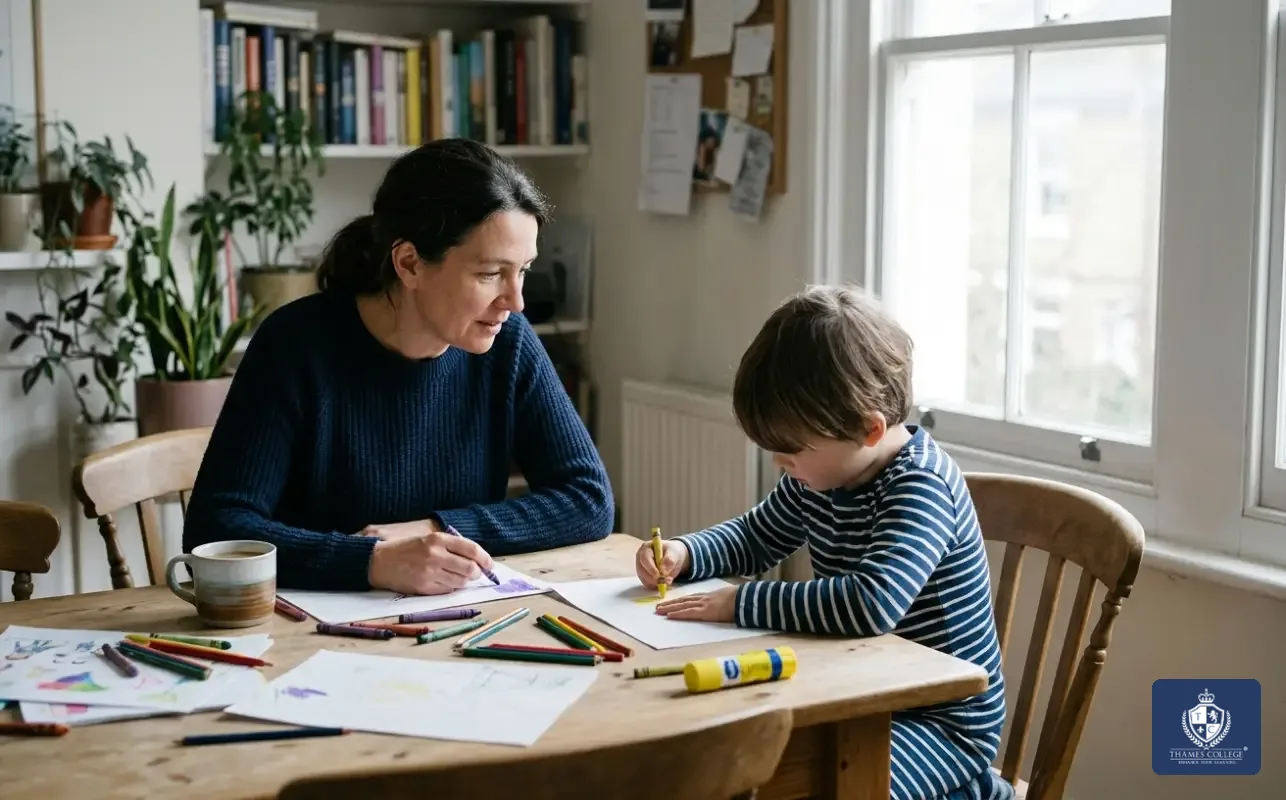
Sometimes, expressing yourself through words can be difficult. Drawing, painting or experimenting with colours offers another way to reflect on feelings, enjoy a quiet moment or share experiences with others.
These 25 art therapy activities for adults and children include mindful drawing, painting, collage, creative journalling and group projects. Most use everyday materials and can be adapted for home, school or community settings.
Whether you’re a parent looking for creative ideas, an adult seeking relaxation, or a support worker planning activities, there’s something here to try.
Table of Contents
Before You Start: Materials and Simple Preparation
You can begin with a comfortable table, a few basic supplies and some uninterrupted time.
Useful materials include:
- Paper, sketchbooks or old notebooks
- Coloured pencils, crayons and washable paints
- Paintbrushes, glue sticks and child-safe scissors
- Old magazines, photographs and recycled cardboard
- Modelling clay and natural materials
Choose activities that suit each person’s age, interests and abilities. Allow everyone to work at their own pace and decide whether they want to share their artwork.
You can also look at techniques used by art therapists to see how creative materials are approached in professional practice.
It’s also useful to distinguish creative wellbeing exercises from professional art therapy. The British Association of Art Therapists defines art therapy as a form of psychotherapy delivered by trained professionals. In the UK, art therapists must be registered with the Health and Care Professions Council (HCPC).
If you’re new to the subject, knowing how art therapy works can help you see the difference between everyday creative activities and professional sessions.
If you’re curious about studying the subject further, our guide to starting art therapy training offers a useful introduction.
Anyone interested in the connection between emotions and creativity may also consider an art therapy and psychology course.
With your materials ready, you can choose an activity that appeals to you.

5 Calming and Mindful Art Therapy Activities
These gentle creative exercises offer opportunities to slow down, concentrate and enjoy working with colours and patterns.
1. Mindful Mandala Drawing
Materials: Paper, pencil and coloured pens.
Draw a large circle and gradually fill it with smaller shapes, lines and repeating patterns. Start at the centre and work outwards.
Choose colours that appeal to you. Children can begin with simple shapes, while adults might enjoy creating more detailed patterns.
2. Mindful Doodling
Materials: Paper and a pen.
Start with a line and let it move freely across the page. Add loops, spirals, dots or shapes wherever you like.
Spend five or ten minutes drawing without planning the finished picture. It’s an easy activity to fit into a busy day.
3. Painting to Music
Materials: Paper, paints, brushes and music.
Play a favourite piece of music and paint the colours or shapes it brings to mind.
You might use energetic strokes during lively sections and softer lines during quieter moments. Experiment with different styles of music to see how your artwork changes.
4. Nature-Inspired Drawing
Materials: Leaves, flowers, paper and pencils.
Choose a natural object and observe its shape, colour and texture. Sketch the details that catch your attention.
You can also make leaf rubbings by placing a leaf beneath thin paper and gently rubbing over it with a crayon.
5. Simple Pattern Colouring
Materials: Colouring sheets or plain paper and pencils.
Draw circles, squares, waves or repeating shapes across a page. Fill each section with colours of your choice.
Try using a limited colour palette or experimenting with contrasting shades. This activity suits beginners who enjoy structured creative exercises.
Other creative activities for anxious feelings include gentle painting and reflective drawing.
5 Art Therapy Activities for Expressing Feelings
Colours, images and shapes can offer a personal way to represent different emotions and experiences.
6. Colour Your Mood
Materials: Paper, crayons or paints.
Choose colours that seem to represent your mood today. Fill the page with shapes, lines or patches of colour.
You might select several colours to represent different feelings. Everyone can interpret colours in their own way, making each picture personal.
7. Create an Emotions Wheel
Materials: Paper, coloured pencils and a ruler.
Draw a circle and divide it into sections. Add feelings such as happiness, excitement, sadness, calmness or frustration.
Choose colours or symbols for each section. Younger children can draw facial expressions instead of writing the names of emotions.
8. Make a Feelings Collage
Materials: Old magazines, paper, scissors and glue.
Look through magazines for pictures, colours or words that catch your attention.
Cut them out and arrange them into a collage representing your feelings, interests or experiences. Add drawings or handwritten words to personalise your artwork.
9. Draw Your Personal Weather
Materials: Paper and coloured pencils.
Imagine your feelings as weather. Draw sunshine, rain, clouds, wind or a mixture of conditions.
For example, an exciting day might become a colourful sunny scene, while a busy afternoon could inspire swirling clouds. Children can invent weather symbols of their own.
10. Create an Abstract Emotion Painting
Materials: Paints, brushes and paper.
Choose a feeling and represent it through colours, shapes and brushstrokes.
Experiment with broad lines, soft curves or overlapping colours rather than drawing recognisable objects.
Let the painting develop naturally. You can give it a title afterwards if you wish.
For those interested in studying creative expression further, art and emotional wellbeing training offers a more structured introduction.
These exercises offer opportunities for self-expression, while research into the benefits of art therapy looks more closely at its therapeutic applications.
5 Creative Art Therapy Activities for Children
Children often enjoy expressing ideas through imaginative characters, stories and colourful projects. These activities can be adapted for different ages and interests.
Choosing creative approaches that suit children’s needs can make these activities more engaging at different ages.
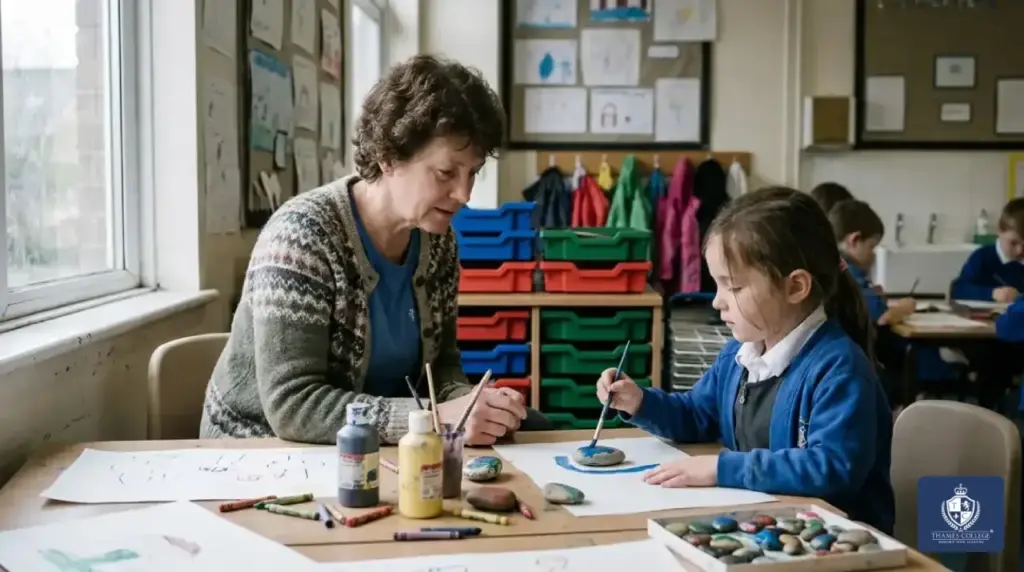
11. Story Stones
Materials: Large, smooth stones and washable paints or markers.
Decorate stones with pictures of animals, houses, stars or trees.
Once dry, choose a few stones and invent a story using the pictures. Parents and children can take turns adding sentences. Select age-appropriate stones and supervise younger children.
12. Draw a Happy Place
Materials: Paper, crayons and coloured pencils.
Invite children to imagine somewhere they enjoy visiting or would like to visit.
They might draw a garden, beach, bedroom or imaginary world. Encourage them to include favourite colours, objects and characters to make the picture their own.
13. Create a Feelings Monster
Materials: Paper, crayons and craft materials.
Ask children to invent a friendly monster using different colours, shapes and facial expressions.
Perhaps it has enormous ears, colourful hair or several tiny feet. Give the character a name and create a short story about its personality and adventures.
14. Comic Strip Storytelling
Materials: Paper and pencils.
Divide a page into three or four boxes. Create a character and draw a short adventure.
The character might make a friend, visit somewhere exciting or solve an everyday problem.
Add speech bubbles, or let younger children tell their stories aloud.
15. Finger Painting and Texture Art
Materials: Child-safe washable paints, paper and sponges.
Place small amounts of paint on a tray and make patterns using fingers, brushes or sponges.
Experiment with dots, swirls, handprints and overlapping colours. Different tools create different textures, giving children opportunities to discover new ways of making pictures.
5 Art Therapy Activities for Self-Reflection
These creative exercises are particularly suitable for adults and older children who enjoy reflecting on personal interests, memories and plans.
16. Creative Art Journalling
Materials: Notebook, coloured pencils and collage materials.
Use a notebook to combine drawings, colours, photographs and short reflections.
One page might represent your day through three colours. Another could feature pictures of things you’ve enjoyed recently.
Create entries whenever inspiration strikes and develop your own journalling style.
If you’d like to build on this activity, an art and journal therapy course introduces further approaches to creative reflection.
17. Self-Portrait Through Symbols
Materials: Paper, pencils and colouring materials.
Instead of drawing your face, create a portrait using symbols that represent your personality or interests.
Include favourite books, animals, hobbies or meaningful places.
Arrange the symbols into a picture that tells a little about who you are.
18. Make a Personal Memory Box
Materials: Small box, photographs, paper and keepsakes.
Decorate a box and fill it with objects connected to meaningful memories.
You might include photographs, postcards, small drawings or written notes.
Choose memories you enjoy revisiting. In care settings, creative activities for people living with dementia can be adapted to individual interests, memories and abilities.
19. Create a Gratitude Tree
Materials: Paper and coloured pencils.
Draw a tree with branches and leaves. On each leaf, write or draw something you appreciate.
This could be a favourite place, a helpful person or a small everyday pleasure.
Add new leaves whenever you think of something else.
20. Design a Vision Board
Materials: Magazines, paper, scissors and glue.
Choose pictures representing activities, interests or experiences you’d like to enjoy in the future.
Arrange them into a colourful board and add drawings or short captions.
Your board might feature travel, hobbies, friendships or simple experiences you’re looking forward to.
5 Art Therapy Activities for Groups and Shared Creativity
Shared art activities encourage cooperation and provide opportunities to exchange ideas. They work well for families, classrooms and community groups.
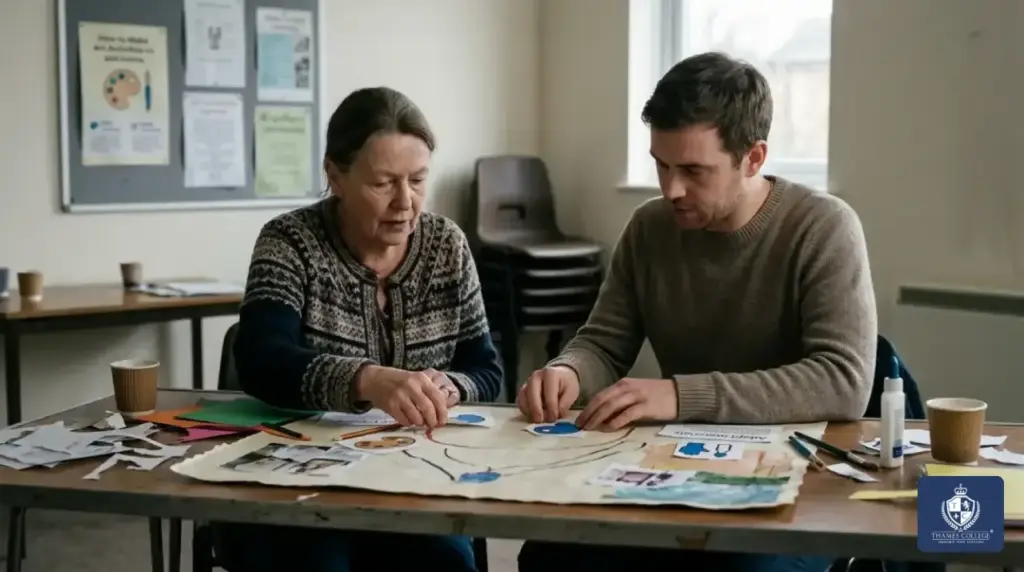
21. Collaborative Group Mural
Materials: Large paper, paints and markers.
Spread a large sheet across a table and choose a theme, such as nature or an imaginary town.
Invite everyone to contribute drawings, patterns or colours. Participants can work on separate sections or combine their ideas into one picture.
22. Pass-the-Drawing Activity
Materials: Paper and pencils.
Each person begins a drawing before passing it to someone else.
The next participant adds a new detail and passes it onwards.
Continue until everyone has contributed. The finished pictures often contain imaginative combinations of different ideas.
23. Group Story Collage
Materials: Magazines, paper, scissors and glue.
Choose a shared story theme, such as an adventure or imaginary journey.
Each participant selects pictures that contribute to the story.
Arrange the images together and invite group members to describe their ideas. Everyone can contribute in different ways.
24. Shared Nature Art
Materials: Leaves, twigs, stones and paper.
Collect or provide safe natural materials and arrange them into a shared design.
Create a flower, landscape or repeating pattern using different shapes and textures.
Take a photograph of the finished artwork before clearing away the materials.
25. Creative Kindness Cards
Materials: Card, coloured pencils and stickers.
Decorate small cards with drawings, patterns or encouraging messages.
Participants might create cards for friends, family members or themselves.
Add flowers, animals or favourite colours to make each design personal. Sharing the finished cards can be an optional part of the activity.
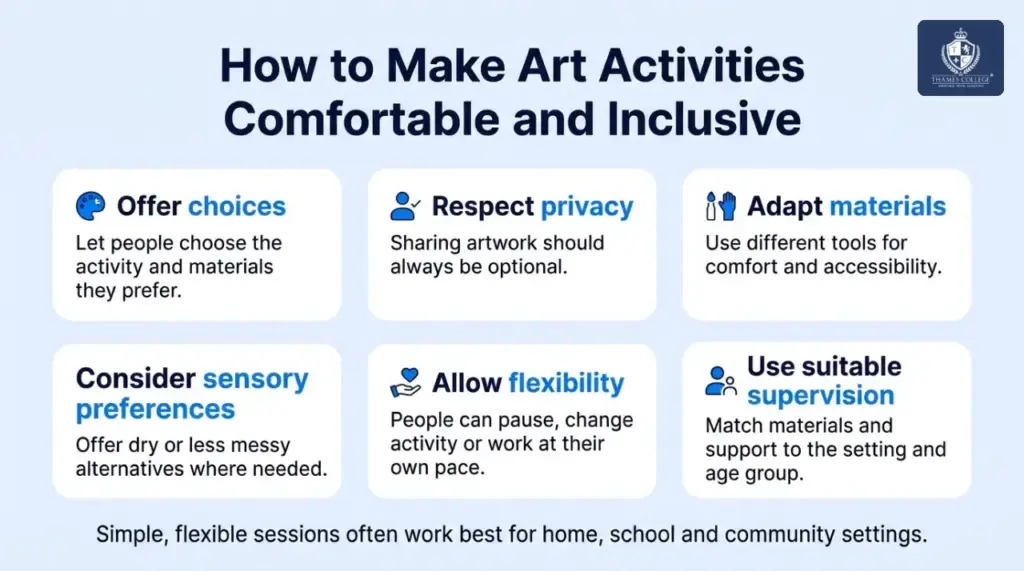
Tips for Making Art Activities Comfortable and Inclusive
A few thoughtful adjustments can make creative sessions suitable for different participants.
- Offer choices: Allow people to select activities and materials that interest them.
- Respect privacy: Let participants decide whether to explain or share their artwork.
- Adapt materials: Use thicker pencils, larger paper or sponges where helpful.
- Consider sensory preferences: Offer brushes or dry materials as alternatives to finger painting.
- Allow flexibility: Participants can pause, change activities or work at their own pace.
- Provide suitable supervision: Choose age-appropriate supplies and follow relevant school or care-setting procedures.
A relaxed atmosphere gives everyone space to experiment, express themselves and enjoy the creative process.
Final Thoughts: Make Creativity Part of Your Routine
Creative activities can become an enjoyable part of everyday life. Start with mindful doodling, a colourful collage or any of the 25 activities that appeal to you.
If you’re considering professional training, it’s useful to check the qualifications needed for an art therapy career before choosing your next step.
For those interested in taking their creativity further, there are several career paths involving art therapy worth reading about.
For readers interested in studying creative wellbeing approaches further, Thames College’s Art Therapy Certification Diploma covers art therapy principles, mindful creativity, drawing and reflective writing. The course offers CPD-accredited and QLS-endorsed certification options for introductory and professional-development learning.
Frequently Asked Questions
Some enjoyable art therapy activities include mindful doodling, mandala drawing, mood painting, collage making and clay modelling. You can also try painting to music or creating a personal vision board. These activities encourage creativity and self-expression, and most can be adapted for adults and children using everyday materials.
Adults can try art journalling, abstract painting, nature-inspired drawing, gratitude trees and self-portraits using personal symbols. Group activities such as collaborative murals and shared collages are also enjoyable options. Choose an activity that suits your interests, whether you prefer quiet creative time or making something with others.
Start with simple exercises such as pattern colouring, mindful doodling, leaf rubbing or drawing your mood using different colours. Most require only paper, pencils or crayons. You can spend 10–20 minutes creating something without needing specialist equipment or previous artistic experience.
In a professional art therapy session, a registered art therapist might invite someone to create an image representing a feeling or experience. The artwork can become a starting point for reflection and conversation. At home, a similar drawing exercise can be enjoyed as a creative wellbeing activity rather than formal therapy.
During a professional art therapy session, a registered art therapist may invite you to draw, paint, sculpt or work with other art materials. You may discuss your artwork, reflect on your experiences or focus on the creative process itself. Activities vary according to individual needs and the therapeutic approach.